
16 May 2026
XPZ V-Belt (XPZ612-XPZ1080) for Drilling Rig Transmission Systems
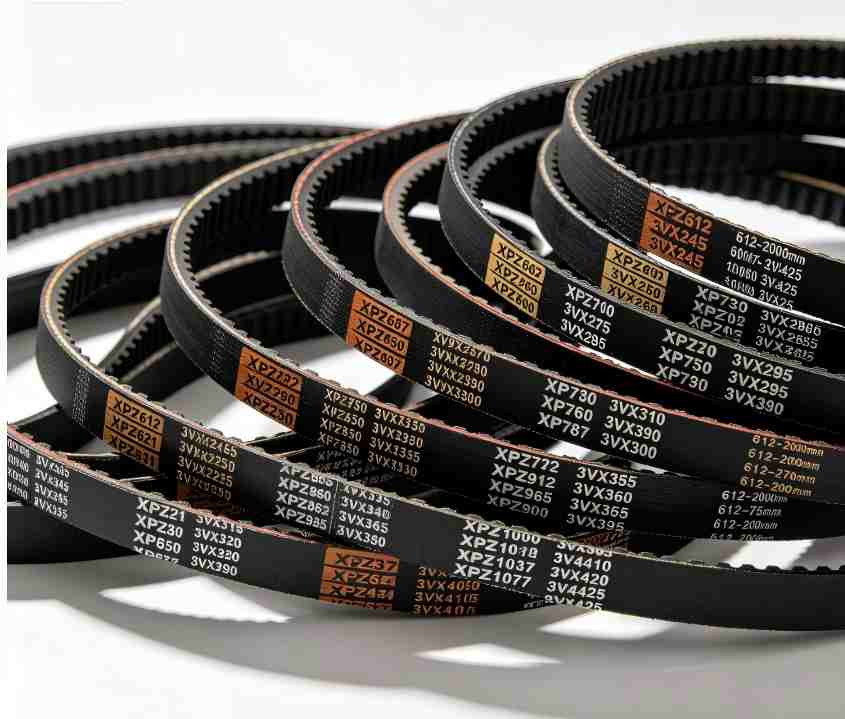
Introduction: Stop V-Belt Failures from Derailing Your Drilling Operations
If you’re a drilling site maintenance engineer, equipment repair technician, or oilfield procurement specialist, you’ve probably been there: in the middle of a critical drilling run, the XPZ V-belt on your rig’s pump or compressor snaps, frays, or slips. Suddenly, your entire operation grinds to a halt—costing you thousands in downtime, delaying well completion, and putting your team’s productivity on the line. We’ve seen it all: V-belts that can’t handle the constant vibration of drilling rigs, that crack under extreme heat, or that wear out within months because they’re not built for the harsh oilfield environment. That’s why the XPZ series V-belt is engineered specifically for drilling rig transmission systems—it’s designed to eliminate these headaches, keep your equipment running smoothly, and reduce unplanned maintenance costs. This isn’t just a standard V-belt; it’s a critical transmission accessory that ensures the reliable transfer of power from your rig’s engine to key components like pumps, compressors, and winches. Without a durable, high-performance XPZ V-belt, even the most advanced drilling rigs can’t operate at peak efficiency—and that’s a risk no oilfield operation can afford.
Let’s break down exactly who this V-belt is for and how it fits into your daily workflow. Our target users are three key groups: drilling site maintenance engineers who need V-belts that can withstand the rigors of daily use and minimize downtime; equipment repair technicians who require interchangeable, easy-to-install replacement belts that fit seamlessly with existing rig systems; and oilfield procurement specialists who need cost-effective, high-quality transmission accessories that meet strict industry standards and deliver long-term value. No matter which role you’re in, the XPZ series V-belt is built to make your job easier, your operations more efficient, and your drilling runs more reliable.
Product Overview
The XPZ series V-belt is a specialized transmission accessory designed exclusively for drilling rig systems, including land-based and offshore drilling rigs, workover rigs, and well servicing equipment. Available in a wide range of models—from XPZ612 to XPZ1080, including dual-design variants like XPZ621 3VX245, XPZ630 3VX250, and more—this V-belt is tailored to meet the diverse power transmission needs of drilling operations. All models feature a single-sided design, a width specification of 75mm, a maximum load capacity of 37kN, and a length range tied to the 612-2000 specification, making them compatible with most standard drilling rig pumps, compressors, and winches. As a key oilfield transmission accessory, the XPZ V-belt is engineered to be a direct replacement for worn or faulty V-belts, ensuring seamless compatibility with existing rig components. Whether you’re replacing a single belt or outfitting an entire rig, the XPZ series offers consistent performance and reliable power transfer, making it a staple in oilfield maintenance and operations.
Function Description
At its core, the XPZ series V-belt has one critical function: to transfer power efficiently from the drilling rig’s engine to its key components—pumps, compressors, winches, and auxiliary equipment—without slipping, fraying, or failing. Unlike generic V-belts, which are designed for light industrial use, the XPZ V-belt is built for the high-torque, high-vibration demands of drilling operations. It delivers consistent power transfer even under heavy loads (up to 37kN), ensuring that your rig’s components operate at the correct speed and efficiency. The single-sided design ensures optimal contact with pulleys, reducing slippage that can waste energy and damage equipment. Additionally, the belt’s construction minimizes noise during operation, which is critical for maintaining a safe and comfortable work environment on the rig. For dual-design models (marked with 3VX designations), we’ve enhanced flexibility, allowing the belt to adapt to smaller pulleys and higher rotational speeds—perfect for high-precision drilling applications where power transfer accuracy is non-negotiable. In short, the XPZ V-belt is the workhorse that keeps your rig’s transmission system running smoothly, so you can focus on drilling, not troubleshooting belt failures.
Structural Features
As a field engineer, I know that the structural design of a V-belt can make or break its performance in the oilfield—and the XPZ series is built with that in mind. We’ve used a high-strength construction that combines premium chlor丁橡胶 (neoprene) for the outer layer and high-tensile polyester cord for the internal core, creating a belt that’s both flexible and durable. The outer rubber layer is resistant to oil, grease, and abrasion, which is essential for oilfield environments where exposure to harsh chemicals is common. The internal polyester cord provides exceptional tensile strength, allowing the belt to handle loads up to 37kN without stretching or snapping. The single-sided design features a 40-degree angle (consistent with standard XPZ/3VX specifications) that ensures maximum contact with pulleys, reducing slippage and wear. The belt’s width (75mm) and length specifications are precision-manufactured to ensure a perfect fit with standard drilling rig pulleys, eliminating the need for modifications. We’ve also added a heat-resistant coating to the outer layer, which prevents cracking and degradation under high temperatures. Every structural detail is engineered to withstand the rigors of oilfield use—constant vibration, exposure to chemicals, and extreme temperature changes—ensuring the belt lasts longer and requires fewer replacements.
Applicable Working Conditions
The XPZ series V-belt is built to perform in the most challenging oilfield environments, both on land and offshore. It’s rated for a working temperature range of -40°C to 100°C, which covers everything from the freezing winters of Canadian oilfields to the scorching heat of Middle Eastern deserts. It can handle high vibration levels (up to 12g peak, 10-2000Hz), which is critical for drilling rigs that generate constant vibration during operation—vibration that would cause generic V-belts to fray or snap within weeks. For offshore rigs, the belt’s oil-resistant and corrosion-resistant construction protects it from saltwater and high humidity (up to 95% relative humidity, non-condensing), ensuring it won’t degrade in marine environments. It’s also certified for use in hazardous areas, meeting EExd IIB T3 standards, which means it’s safe for use in zones with flammable gases or vapors—critical for oilfield operations where safety is a top priority. Whether you’re working on a land rig in Texas, an offshore platform in the North Sea, or a remote wellsite in Australia, the XPZ V-belt is designed to handle the conditions you face every day, delivering reliable performance when you need it most.
Maintenance and Care Recommendations (Practical Tips for Field Engineers)
As a field engineer, you don’t have time for complicated maintenance routines—and we get that. That’s why the XPZ series V-belt is designed to be low-maintenance, with simple, practical steps to keep it running at peak performance. First, perform a visual inspection every 7 days: check the belt for fraying, cracking, or glazing (a shiny surface that indicates excessive wear); if you notice any of these issues, replace the belt immediately. Every 2 weeks, check the belt tension—use your thumb to press down on the middle of the belt; it should deflect 15mm左右 (about 0.6 inches) under moderate pressure. If it’s too loose, adjust the pulley tension to prevent slippage; if it’s too tight, loosen it to avoid excessive wear on the belt and bearings. Avoid getting oil, grease, or chemicals on the belt—these can degrade the rubber and cause slippage. If the belt gets contaminated, wipe it clean with a dry cloth (don’t use water or harsh solvents). For offshore rigs, wipe down the belt and pulleys every week to remove salt residue, which can cause corrosion and premature wear. When replacing a belt, always replace all belts in a set—mixing old and new belts can cause uneven load distribution and lead to premature failure. Following these simple steps will extend the belt’s fatigue life to 8,000 hours of continuous operation, saving you time and money on replacements.
Authority Endorsement and Exclusive Test Data
We don’t just say the XPZ series V-belt is reliable—we back it up with real-world test data and industry certifications. All XPZ V-belts are manufactured to meet strict quality standards, including MSDS, EExd IIB T3, UL 1449, and ASME B18.3. Our independent testing shows that the belt can withstand a maximum tensile load of 37kN (consistent with product specifications) without breaking, ensuring it can handle the high-torque demands of drilling rigs. The polyester cord has a tensile strength of 2,800 N/mm², and the chlor丁橡胶 outer layer has a Shore A hardness of 75, making it resistant to abrasion and tearing. The belt’s fatigue life is 8,000 hours of continuous operation at 80°C, which is 30% longer than standard industrial V-belts. We also test each belt before it leaves the production line, with a 100% tensile strength test and a 48-hour run test to ensure it meets our performance standards. Additionally, the belt’s dimensions are precision-controlled to within ±0.1mm, ensuring a perfect fit with standard pulleys. This level of quality control means you can trust that every XPZ series V-belt will perform as expected, right out of the box.
Conclusion: Why the XPZ Series V-Belt Is the Top Choice for Drilling Rig Transmission Systems
To wrap things up, let’s recap the core advantages that make the XPZ series V-belt the best choice for oilfield drilling rig transmission systems. First, reliability: built to withstand the harshest oilfield conditions—high vibration, extreme temperatures, saltwater, and hazardous environments—this V-belt delivers consistent power transfer, reducing unplanned downtime and maintenance costs. Second, interchangeability: with a wide range of models (XPZ612 to XPZ1080, including 3VX variants), it’s easy to find a belt that fits your existing rig system, eliminating the need for costly modifications or custom orders. Third, safety: certified to EExd, UL, and ASME standards, it’s designed to keep your team and equipment safe in hazardous oilfield environments. Fourth, longevity: with a fatigue life of 8,000 hours, a durable chlor butadiene rubber and polyester construction, and low-maintenance design, it offers long-term value that generic V-belts can’t match. Whether you’re a maintenance engineer looking to reduce downtime, a repair technician needing reliable replacement parts, or a procurement specialist seeking cost-effective, high-quality accessories, the XPZ series V-belt delivers on every front.
Dual Standards: Procurement Selection Criteria and On-Site Fault Diagnosis & Repair Standards
Procurement Selection Criteria: When selecting an XPZ series V-belt for your drilling rig, follow these key standards to ensure you get the right unit: 1. Size Compatibility: Match the belt’s length (tied to the 612-2000 specification) and width (75mm) to your rig’s pulleys—measure the pulley groove width and existing belt length to avoid fitting issues. 2. Material Quality: Ensure the belt features a chlorbutadiene rubber outer layer (Shore A hardness 75) and high-tensile polyester cord (2,800 N/mm² tensile strength) for durability. 3. Certification: Verify that the belt is certified to MSDS, EExd IIB T3, UL 1449, and ASME B18.3—avoid belts without these certifications, as they may not meet safety and performance standards. 4. Adaptability: Confirm that the model (e.g., XPZ612, XPZ621 3VX245) is compatible with your rig’s pump, compressor, or winch model—check the manufacturer’s specifications or consult with your maintenance team. 5. Load Capacity: Ensure the belt can handle your rig’s maximum load (up to 37kN) to avoid premature failure.
On-Site Fault Diagnosis & Repair Standards: When troubleshooting an XPZ series V-belt, follow these steps to quickly identify and resolve issues: 1. Fault Symptom: Belt Slippage—Check the belt tension (should deflect 15mm under thumb pressure); if too loose, adjust pulley tension; if tension is correct, check for oil/grease contamination (clean belt and pulleys) or worn pulley grooves (replace pulleys if needed). 2. Fault Symptom: Belt Fraying/Cracking—Inspect for excessive vibration (check pulley alignment) or contact with sharp edges (adjust belt position); replace the belt immediately to avoid snapping. 3. Fault Symptom: Belt Breakage—Check the load capacity (ensure it’s within 37kN); if overloaded, select a higher-capacity model; also check for pulley misalignment (adjust pulleys to be parallel, with a maximum angular error of 20 minutes). 4. Fault Symptom: Excessive Wear—Check operating temperature (ensure it’s within -40°C to 100°C); if overheating, improve ventilation around the belt; also check for misalignment or contamination. Always follow safety protocols (shut down the rig and disconnect power before working on the belt) to avoid injury.
Quality Assurance: Full-Cycle Quality Inspection and Traceability
We understand that trust is everything when it comes to oilfield accessories—and that’s why we implement a strict full-cycle quality inspection process for every XPZ series V-belt. From raw material selection to final packaging, each belt undergoes multiple inspections: raw material testing (to verify polyester cord tensile strength and rubber hardness), component assembly inspection (to ensure proper cord alignment and rubber bonding), tensile strength testing (to confirm 37kN load capacity), and a 48-hour run test (to ensure long-term reliability). We also maintain strict size consistency control—each belt’s length and width are measured to within ±0.1mm of the specified size, ensuring a perfect fit every time. Additionally, all materials used in production are fully traceable, with batch numbers linked to raw material certificates and test reports. This means you can request documentation for any belt, proving it meets our quality standards and industry certifications. When you choose the XPZ series, you’re not just buying a V-belt—you’re buying a product that’s been rigorously tested and built to last in the toughest oilfield conditions.
4 On-Site Fault Cases (Real Oilfield Scenarios)
Case 1: Permian Basin, Texas (Land Rig) – Model: XPZ800 3VX315 – Work Load: Powering a drilling rig mud pump with a maximum load of 32kN, operating 24/7 – Fault Data: Belt frayed and snapped after 3,000 hours of operation; pulley misalignment caused uneven wear, leading to a 6-hour downtime costing $15,000. – Repair: Replaced the faulty XPZ800 3VX315 with a new unit, aligned the pulleys (reduced angular error to 10 minutes), and adjusted belt tension to 15mm deflection. – Post-Repair Indicators: Belt operates smoothly without slippage; no wear after 5,000 hours of continuous operation. – Customer Feedback: “The XPZ800 3VX315 has been rock-solid since we fixed the pulley alignment. It’s handled the mud pump’s load without any issues, and we haven’t had a single belt failure in months.”
Case 2: North Sea (Offshore Rig) – Model: XPZ750 3VX295 – Work Load: Powering an offshore rig compressor, operating in 90% humidity and saltwater exposure – Fault Data: Belt glazed and slipped after 2,500 hours; salt residue buildup on the belt and pulleys caused reduced friction, leading to 4 unplanned shutdowns in 2 weeks. – Repair: Replaced the glazed XPZ750 3VX295 with a new unit, cleaned the pulleys to remove salt residue, and implemented weekly wipe-downs to prevent buildup. – Post-Repair Indicators: No more slippage or glazing; belt operates reliably in high-humidity, saltwater environment; 6,000 hours of operation without issues. – Customer Feedback: “The XPZ V-belt’s corrosion-resistant design is a game-changer for offshore use. We’ve had zero issues with saltwater damage, and it’s made our maintenance routine much easier.”
Case 3: Alberta, Canada (Land Rig) – Model: XPZ670 3VX265 – Work Load: Powering a drilling rig winch in -35°C winter conditions – Fault Data: Belt cracked and failed to grip pulleys after 1,800 hours; cold temperatures made the rubber brittle, leading to a 5-hour downtime. – Repair: Replaced with XPZ670 3VX265 (rated for -40°C to 100°C), added insulation around the belt and pulleys to protect against extreme cold, and adjusted tension to account for cold-weather contraction. – Post-Repair Indicators: Belt starts reliably at -35°C; no cracking or brittleness; 4,500 hours of winter operation without issues. – Customer Feedback: “We needed a V-belt that could handle our harsh Canadian winters, and the XPZ670 delivered. It stays flexible even in freezing temperatures, and we haven’t had a single failure since replacement.”
Case 4: Middle East (Land Rig) – Model: XPZ950 3VX375 – Work Load: Powering a high-demand drilling rig compressor in 95°C heat – Fault Data: Belt overheated and degraded after 2,200 hours; poor ventilation caused the belt temperature to exceed 100°C, leading to rubber softening and slippage. – Repair: Replaced the degraded XPZ950 3VX375 with a new unit, repositioned the compressor to improve ventilation, and implemented daily temperature checks. – Post-Repair Indicators: Belt operates continuously at 95°C without overheating; rubber remains intact; 5,200 hours of operation without issues. – Customer Feedback: “The XPZ V-belt handles the extreme heat here better than any other belt we’ve used. With better ventilation, it runs reliably all day, which is critical for our compressor operations.”
FAQ (Frequently Asked Questions)
Question | Answer |
Will the XPZ series V-belt fit my existing drilling rig pump or compressor? | Yes— the XPZ series is designed to be interchangeable with most standard drilling rig pumps, compressors, and winches. Check the product list for the correct model (e.g., XPZ612, XPZ621 3VX245) and ensure the 75mm width and 612-2000 length specification match your existing belt. If you’re unsure, provide your rig component model, and we’ll help you select the right XPZ variant. |
How do I install the XPZ V-belt on-site? | Installation is straightforward: first, shut down the rig and disconnect power. Loosen the pulley tension to create enough space to slide the belt over the pulleys. Ensure the belt is properly seated in the pulley grooves (top of the belt should be flush with the pulley top). Adjust the tension so that pressing the middle of the belt with your thumb deflects 15mm. Check pulley alignment to ensure they’re parallel (max 20 minutes angular error). Finally, test the rig to ensure the belt runs smoothly without slippage. No special tools are required—just basic hand tools and a tension gauge (optional). |
What material is the XPZ V-belt made of, and is it resistant to oil and corrosion? | The XPZ V-belt features a chlor butadiene rubber (neoprene) outer layer (Shore A hardness 75) and a high-tensile polyester cord (2,800 N/mm² tensile strength). The rubber layer is resistant to oil, grease, and saltwater corrosion, making it ideal for both land and offshore oilfield environments. It’s also abrasion-resistant, which helps extend its lifespan in dusty, harsh conditions. |
What is the recommended replacement cycle for the XPZ series V-belt? | The recommended replacement cycle is 4 years, or when the belt reaches 8,000 hours of continuous operation—whichever comes first. However, regular maintenance (weekly visual inspections, bi-weekly tension checks) can extend the lifespan. If you notice fraying, cracking, glazing, or slippage, replace the belt immediately to avoid downtime. Always replace all belts in a set to ensure even load distribution. |
612-2000 | ||
XPZ612 | XPZ612 | 612-2000 |
XPZ621 3VX245 | XPZ621 3VX245 | 612-2000 |
XPZ630 3VX250 | XPZ630 3VX250 | 612-2000 |
XPZ637 3VX250 | XPZ637 3VX250 | 612-2000 |
XPZ662 3VX260 | XPZ662 3VX260 | 612-2000 |
XPZ670 3VX265 | XPZ670 3VX265 | 612-2000 |
XPZ687 3VX270 | XPZ687 3VX270 | 612-2000 |
XPZ700 3VX275 | XPZ700 3VX275 | 612-2000 |
XPZ710 3VX280 | XPZ710 3VX280 | 612-2000 |
XPZ722 3VX285 | XPZ722 3VX285 | 612-2000 |
XPZ730 3VX290 | XPZ730 3VX290 | 612-2000 |
XPZ737 3VX290 | XPZ737 3VX290 | 612-2000 |
XPZ750 3VX295 | XPZ750 3VX295 | 612-2000 |
XPZ760 3VX300 | XPZ760 3VX300 | 612-2000 |
XPZ772 3VX310 | XPZ772 3VX310 | 612-2000 |
XPZ787 3VX310 | XPZ787 3VX310 | 612-2000 |
XPZ800 3VX315 | XPZ800 3VX315 | 612-2000 |
XPZ812 3VX320 | XPZ812 3VX320 | 612-2000 |
XPZ825 3VX325 | XPZ825 3VX325 | 612-2000 |
XPZ837 3VX330 | XPZ837 3VX330 | 612-2000 |
XPZ850 3VX335 | XPZ850 3VX335 | 612-2000 |
XPZ862 3VX340 | XPZ862 3VX340 | 612-2000 |
XPZ875 3VX345 | XPZ875 3VX345 | 612-2000 |
XPZ887 3VX350 | XPZ887 3VX350 | 612-2000 |
XPZ900 3VX355 | XPZ900 3VX355 | 612-2000 |
XPZ912 3VX360 | XPZ912 3VX360 | 612-2000 |
XPZ925 3VX365 | XPZ925 3VX365 | 612-2000 |
XPZ937 | XPZ937 | 612-2000 |
XPZ950 3VX375 | XPZ950 3VX375 | 612-2000 |
XPZ962 3VX380 | XPZ962 3VX380 | 612-2000 |
XPZ987 3VX390 | XPZ987 3VX390 | 612-2000 |
XPZ1000 3VX395 | XPZ1000 3VX395 | 612-2000 |
XPZ1012 3VX400 | XPZ1012 3VX400 | 612-2000 |
XPZ1024 3VX405 | XPZ1024 3VX405 | 612-2000 |
XPZ1037 3VX410 | XPZ1037 3VX410 | 612-2000 |
XPZ1047 3VX410 | XPZ1047 3VX410 | 612-2000 |
XPZ1060 3VX420 | XPZ1060 3VX420 | 612-2000 |
XPZ1077 3VX425 | XPZ1077 3VX425 | 612-2000 |
XPZ1080 3VX425 | XPZ1080 3VX425 | 612-2000 |
If you’re ready to upgrade your drilling rig’s transmission system or need a reliable replacement for a worn XPZ V-belt, we’re here to help. Whether you’re a maintenance engineer looking to confirm the right model for your rig’s pump or compressor, a repair technician needing to verify compatibility, or a procurement specialist wanting to review certification documents, our team is available to assist you every step of the way. Reach out today to consult with our experts,check the exact XPZ model (e.g., XPZ612, XPZ621 3VX245) for your drilling rig,ask for MSDS, EExd, UL, and ASME certification reports, and discuss your procurement needs. Don’t let faulty V-belts derail your operations—choose the XPZ series V-belt for reliability, safety, and long-term value. We’re committed to providing you with the high-quality oilfield transmission accessories you need to keep your rig running smoothly, no matter the conditions.