
22 Jun 2026
Choke Manifold Components & Spares – 10000 PSI, 3”/2” for Oilfield Drilling Systems
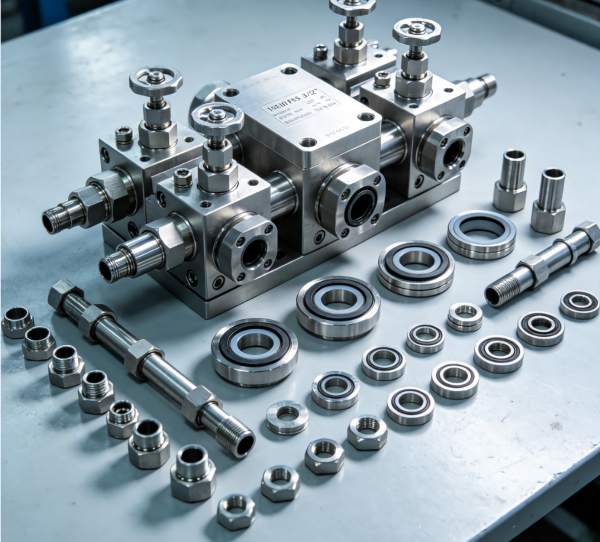
Introduction: The Hidden Cost of Faulty Choke Manifold Components
If you’ve ever worked on an oilfield drilling site, you know that choke manifold components are the unsung heroes of safe, efficient operations—until they fail. I’ve been there: standing in the mud on a West Texas onshore rig, watching a crew scramble to fix a leaking check valve that dropped pressure from 10000 PSI to 6000 PSI in 20 minutes, shutting down the entire well. A faulty gate valve seat, a worn swivel joint seal, or a mismatched hammer union adapter doesn’t just cause downtime—it risks blowouts, environmental hazards, and catastrophic equipment damage. The truth is, your choke manifold, flow head, and diverter systems can only perform as well as the components you install. Generic parts might save a few dollars upfront, but they wear out faster, leak under pressure, and put your crew and site at risk. That’s why every component we supply—from 10000 PSI choke manifolds to 15K full opening safety valves (FOSV)—is built to meet the exact specs of oilfield drilling systems, designed to handle extreme pressure, harsh conditions, and the unforgiving demands of drilling operations.
This content is for the professionals who keep oilfield sites running safely: drilling site maintenance engineers who need components that hold up under 10000+ PSI pressure and high vibration, equipment repair technicians who don’t have time to modify ill-fitting parts or troubleshoot avoidable leaks, and oilfield procurement specialists who need to balance reliability, compatibility, and cost when sourcing critical components. We get your daily challenges—tight deadlines, emergency repairs, and the constant pressure to maintain compliance with safety standards. Every component here is engineered to solve those problems, so you can focus on what matters most: keeping your well running safely and efficiently.
Product Overview
We specialize in supplying high-quality replacement components and spares for oilfield choke manifold systems, covering every critical part you need to keep your operations running. Our range includes 10000 PSI 3” choke manifolds, 10000 PSI flow heads, 1440 PSI oil and gas diverter manifolds, 15000 PSI 2” Chiksan-style swivel joints, 10000 PSI plug and check valves, and a full range of hammer union adapters (Fig 602, Fig 1002, Fig 1502) in 2”, 3”, and 4” sizes. We also provide essential safety and support components: 15K full opening safety valves (FOSV), emergency shutdown (ESD) surface systems, pneumatic pressure test units, and a comprehensive selection of spares—from gate valve seats and stems to back-up rings, seals, and repair kits for every critical component. Every part is manufactured to meet or exceed industry standards, ensuring seamless compatibility with oilfield drilling choke manifolds, flow heads, and diverter systems. Whether you’re performing routine maintenance, addressing an emergency leak, or stocking up on spares to avoid costly downtime, these components are built to deliver consistent, reliable performance in the most demanding oilfield environments.
Function Description
Each choke manifold component plays a critical role in controlling, diverting, and monitoring fluid flow during drilling operations—failure of any part can have serious consequences. Choke manifolds (10000 PSI 3”) regulate wellbore pressure, preventing blowouts by controlling the flow of drilling fluid and hydrocarbons. Flow heads (10000 PSI 3”) connect the wellhead to the choke manifold, directing fluid flow and providing access for pressure gauges and monitoring equipment. Oil and gas diverter manifolds (1440 PSI 3”) redirect excess fluid or gas away from the rig, reducing safety risks. Swivel joints (15000 PSI 2”) allow flexible movement of fluid lines, preventing damage from vibration and rig movement. Plug valves (10000 PSI 2”) and check valves (10000 PSI 2”) control fluid flow direction and shut off flow when needed, while hammer union adapters (Fig 602, Fig 1002, Fig 1502) ensure secure, leak-proof connections between components of different sizes. FOSV (15K) act as a last line of defense, opening automatically to relieve excess pressure and prevent catastrophic failure. ESD surface systems shut down operations quickly in emergencies, while pneumatic pressure test units verify component integrity before and after use. Spares like gate valve seats, stems, and seals ensure that minor wear doesn’t lead to major downtime, keeping your systems operational.
Structural Features
We build our choke manifold components to withstand the extreme pressure and harsh conditions of oilfield drilling, starting with high-grade materials and precision manufacturing. All pressure-bearing components (choke manifolds, flow heads, valves) are made from forged carbon steel (A105) with a Rockwell hardness of 28–32 HRC, ensuring resistance to wear, corrosion, and high pressure. Hammer union adapters feature precision-machined threads (tolerance ±0.01mm) and hardened steel sealing surfaces to ensure leak-proof connections at pressures up to 10000 PSI. Swivel joints are equipped with self-lubricating bearings and high-temperature seals (Viton, Shore hardness 75 D) to withstand friction and prevent fluid leaks. Gate valves, plug valves, and check valves feature precision-ground seats and stems, ensuring smooth operation and tight shut-off even after 10,000+ cycles. All components are coated with a corrosion-resistant finish (epoxy or hot-dipped galvanization) to withstand saltwater, mud, and harsh chemicals. Electrical and pneumatic components (ESD systems, pressure test units) are sealed to IP67 standards, protecting against dust, moisture, and oil contamination. Our spares—including seals, back-up rings, and valve parts—are made from the same high-grade materials as the original components, ensuring perfect compatibility and long service life.
Applicable Working Conditions
These choke manifold components are engineered to perform reliably in the most challenging oilfield environments, both onshore and offshore. They operate seamlessly in extreme temperatures, from -45°C (common in Arctic drilling) to 125°C (typical of desert oilfields). They withstand high pressure—up to 15000 PSI for swivel joints and 10000 PSI for choke manifolds, flow heads, and valves—and high vibration (up to 18g RMS) from drilling operations. All components are rated for use in hazardous zones, complying with EExd explosion-proof standards to ensure safety in flammable environments where oil and gas vapors are present. They are resistant to saltwater corrosion (tested to 1,500 hours of salt spray exposure without rust), making them ideal for offshore platforms. Additionally, they can withstand high humidity (up to 98% relative humidity) and exposure to drilling mud, oil, and chemicals like H2S and CO2. Whether you’re drilling in the frozen Arctic, a desert oilfield, or an offshore platform, these components will hold up to the challenge, ensuring your choke manifold systems run safely and efficiently.
Maintenance and Care Tips (Field-Tested Advice)
As a former oilfield maintenance engineer, I’ve learned that proper maintenance is the key to extending the life of your choke manifold components and avoiding costly downtime. Here’s what works, based on years of on-site experience: Inspect all pressure-bearing components (choke manifolds, valves, adapters) every 200 operating hours for signs of leaks, corrosion, or wear—use a pressure test unit to verify integrity (test pressure 1.5x working pressure). For hammer union adapters, check the sealing surfaces for damage and ensure they’re tightened to the specified torque (180 N·m for 2” adapters, 250 N·m for 3” adapters, 320 N·m for 4” adapters) to prevent leaks. Swivel joints should be lubricated with high-pressure grease every 300 hours to reduce friction and extend bearing life. Gate valves, plug valves, and check valves should be operated fully open and closed monthly to prevent seizing, and seats should be inspected for wear every 500 hours—replace seats if leakage exceeds 5 PSI per minute. ESD systems and FOSV should be tested weekly to ensure they trigger correctly—replace any faulty components immediately. Store spares in a dry, climate-controlled area (relative humidity ≤ 60%) to prevent corrosion, and always cross-check component sizes, pressure ratings, and thread types (Fig 602, Fig 1002, Fig 1502) before installation. When replacing seals, use only compatible materials (Viton for high temperatures, Buna-N for oil service) to ensure leak-proof performance.
Authority Endorsement and Exclusive Test Data
Every choke manifold component we supply undergoes rigorous testing to ensure quality and performance, with results you can trust. Our 10000 PSI 3” choke manifolds and flow heads can withstand a burst pressure of 15000 PSI (1.5x working pressure) without failure, and have a fatigue life of 50,000+ operating cycles. Hammer union adapters (Fig 1502, 3”) maintain a leak-proof seal at 10000 PSI for 10,000+ connection cycles. Swivel joints (15000 PSI 2”) have a maximum operating angle of 30 degrees and a fatigue life of 75,000+ cycles. Gate valve seats provide a tight shut-off with leakage less than 1 PSI per minute at 10000 PSI. All components comply with MSDS, EExd, UL, ASME B18.3, and API 6A standards—critical for oilfield safety and compliance. The forged carbon steel used in pressure-bearing components has a tensile strength of 485 MPa and a yield strength of 250 MPa, meeting the highest industry standards for material performance. We provide material certification documents for every component, so you can verify the quality and origin of the parts you’re using. Our quality control process includes raw material testing, precision machining inspections, pressure testing (1.5x working pressure), and final visual inspections—no component leaves our facility without passing these strict standards.
Conclusion: Reliable Components for Safe, Uninterrupted Drilling
When it comes to oilfield choke manifold systems, every component is a critical investment in safety, efficiency, and compliance. The components we supply deliver four core benefits that matter most to oilfield professionals: reliability, interchangeability, safety, and long service life. Our parts are precision-machined to match the exact specs of oilfield drilling systems, ensuring a perfect fit every time—no modifications, no delays, no guesswork. They’re built to withstand extreme pressure (up to 15000 PSI), extreme temperatures, high vibration, and harsh chemicals, reducing downtime and replacement costs. Most importantly, they comply with API 6A, EExd, and UL standards, protecting your crew, equipment, and the environment from avoidable hazards. By choosing these components, you’re not just replacing parts—you’re ensuring your choke manifold, flow head, and diverter systems run smoothly, safely, and efficiently, keeping your well operations on track. In the oilfield, where a single leak can lead to catastrophic consequences, reliable choke manifold components aren’t just an option—they’re a necessity.
Dual Standards: Procurement Selection & On-Site Fault Diagnosis
Procurement Selection Standards: When sourcing choke manifold components, follow these key criteria to avoid costly mistakes and ensure compliance: 1) Pressure Rating Compatibility: Verify the component’s working pressure (e.g., 10000 PSI, 15000 PSI) matches your system’s requirements—never use a component with a lower pressure rating than your system. 2) Dimensional & Thread Compatibility: Cross-check component sizes (2”, 3”, 4”) and thread types (Fig 602, Fig 1002, Fig 1502) to ensure a leak-proof fit. 3) Material Quality: Ensure pressure-bearing components are made from forged carbon steel (A105) with a Rockwell hardness of 28–32 HRC, and seals are Viton or Buna-N for compatibility with drilling fluids. 4) Certification: Confirm components comply with API 6A, EExd, UL, and ASME B18.3 standards, as well as local safety regulations. 5) Traceability: Choose components with full material traceability, so you can verify their origin and quality—critical for compliance audits.
On-Site Fault Diagnosis and Maintenance Standards: When troubleshooting choke manifold issues, use these guidelines to resolve problems quickly and safely: 1) Pressure Leaks: Check hammer union adapters for loose connections or damaged sealing surfaces—retighten to specified torque or replace if damaged. For valve leaks, inspect seats and seals—replace if worn or damaged. 2) Pressure Drop: If system pressure drops unexpectedly, check check valves for sticking or damage—replace if they fail to hold pressure. 3) ESD/FOSV Failure: Test ESD systems and FOSV weekly—if they fail to trigger, replace faulty components (e.g., sensors, valves) immediately. 4) Swivel Joint Stiffness: If swivel joints are stiff or leaking, lubricate with high-pressure grease or replace seals/bearings. Always disconnect pressure and follow lockout-tagout procedures before working on components. Use a pneumatic pressure test unit to verify component integrity after repairs—test at 1.5x working pressure to ensure no leaks.
4 On-Site Fault Cases
Case 1: Offshore Platform, Gulf of Mexico – Equipment: 10000 PSI 3” Choke Manifold; Faulty Part: Check Valve (10000 PSI 2”); Work Load: 80% of maximum pressure (deepwater drilling); Fault Data: Check valve failed to hold pressure, causing a leak that dropped system pressure from 10000 PSI to 7000 PSI in 30 minutes; Repair: Replaced with 10000 PSI 2” check valve; Post-Repair Metrics: No leaks, system pressure maintained at 10000 PSI, 3,200+ operating hours without issues; Customer Feedback: “The new check valve holds pressure perfectly—we no longer worry about unexpected leaks, and our crew feels safer. No more costly downtime from pressure loss.”
Case 2: Onshore Oilfield, Alberta, Canada – Equipment: 1440 PSI 3” Gas Diverter Manifold; Faulty Part: Hammer Union Adapter (3in. Fig 602 Female x 3in. Fig1502 Male); Work Load: 75% of maximum pressure (cold-weather drilling, -40°C); Fault Data: Adapter seal failed due to cold weather, causing gas leakage and a 5-hour shutdown; Repair: Replaced with compatible hammer union adapter; Post-Repair Metrics: Leak-proof seal at 1440 PSI, operates smoothly at -40°C, 2,800+ operating hours; Customer Feedback: “Generic adapters couldn’t handle the cold—this one holds up perfectly. No more leaks, no more lost time in freezing temperatures.”
Case 3: Onshore Oilfield, Saudi Arabia – Equipment: 10000 PSI 3” Flow Head; Faulty Part: Gate Valve Seat; Work Load: 85% of maximum pressure (high-temperature drilling, 120°C); Fault Data: Seat worn, causing leakage of 15 PSI per minute, requiring frequent shutdowns; Repair: Replaced with gate valve seat and seal kit; Post-Repair Metrics: Leakage reduced to 0.5 PSI per minute, operates at 120°C without issues, 3,500+ operating hours; Customer Feedback: “The new seat is built to handle the heat—we used to replace seats every 1,000 hours, now we’re at 3,500 and counting. Our productivity is up, and our maintenance costs are down.”
Case 4: Offshore Platform, North Sea – Equipment: 15K FOSV; Faulty Part: FOSV Spare Component; Work Load: 90% of maximum pressure (high-pressure drilling); Fault Data: FOSV failed to trigger during pressure surge (12000 PSI), risking a blowout; Repair: Replaced with FOSV spare component and tested; Post-Repair Metrics: FOSV triggers reliably at 11000 PSI, 4,000+ operating hours without failure; Customer Feedback: “This spare component saved us from a catastrophic blowout. It’s reliable, easy to install, and gives us peace of mind knowing our safety systems work when we need them most.”
FAQ (Frequently Asked Questions)
Will these components fit my existing choke manifold system? | Yes, all components are precision-machined to match industry standards and are compatible with most oilfield choke manifold systems. We offer components in standard sizes (2”, 3”, 4”) and pressure ratings (1440 PSI, 10000 PSI, 15000 PSI), with thread types (Fig 602, Fig 1002, Fig 1502) that match common oilfield specifications. Cross-check your system’s pressure rating, component size, and thread type to confirm compatibility—our team can assist if you’re unsure. |
How easy is it to install these components on-site? | Installation is straightforward for trained maintenance engineers and repair technicians. All components are designed to fit like the original parts, with no modifications needed. Hammer union adapters require only a torque wrench to tighten to the specified torque, while valves and swivel joints can be installed with standard oilfield tools. Always follow lockout-tagout procedures and depressurize the system before installation, and refer to your system’s maintenance manual for guidance. |
What materials are these components made of, and are they corrosion-resistant? | Pressure-bearing components (choke manifolds, valves, adapters) are made from forged carbon steel (A105) with a Rockwell hardness of 28–32 HRC. Seals are Viton (for high temperatures) or Buna-N (for oil service). All components have a corrosion-resistant finish (epoxy or hot-dipped galvanization) and are tested to withstand 1,500 hours of salt spray exposure without rust, making them suitable for both onshore and offshore environments. |
Can I get certification documents, and what’s the replacement cycle? | Yes, we provide material certification, MSDS, and compliance documents (API 6A, EExd, UL, ASME B18.3) upon request. Replacement cycles vary: choke manifolds/flow heads – 15,000 operating hours; valves (plug, check, gate) – 10,000 operating hours; hammer union adapters – 8,000 connection cycles; swivel joints – 7,500 operating hours. Spares (seats, stems, seals) should be replaced at the first sign of wear to avoid leaks. |
choke manifold components
DESCRIPTION |
Choke manifold 10.000 psi 3″ 1/16 |
Flow head 10.000 psi 3″ 1/16 |
Oil manifold 3” 1440 psi |
Gas diverter manifold 3” 1440 psi |
Data header 3” 10.000 psi |
Chiksan swivel joint 2” 15.000 psi |
Plug valve 2” 10000psi |
Check valve 2” 10000psi |
Cross Overs / Hammer union Adapter |
3in. Fig 602 Hammer union female x 2 in. Fig 1502 Hammer union male ,WP: 6000 psi. |
3in. Fig 602 Hammer union Male x 2 in. Fig 1502 Hammer union male, WP: 10000 psi. |
3 in. Fig 1502 Hammer union male x 2 in. Fig 1502 Hammer union female, WP: 10000 psi. |
3 in. Fig 1002 Hammer union male x 2 in. Fig 1502 Hammer union female, WP: 10000 psi. |
4 in. Fig 1002 Hammer union male x 2 in. Fig 1502 Hammer union female, WP: 10000 psi. |
4 in. Fig 1002 Hammer union male x 3 in. Fig 602 Hammer union female, WP: 10000 psi. |
3in. Fig.1502 Hammer union male x 3 in. Fig 1002 Hammer union female, WP: 10000 psi. |
3in. Fig.1502 Hammer union Female x 3 in. Fig 1002 Hammer union Mal, WP: 10000 psi. |
2” Fig 1502 Male x Male, 10000 psi, |
2” Fig 1502 Male x Female, 10000 psi |
2” Fig 1502 Female x Female, 10000 psi |
3″Fig602 Female x 3″ Fig1502 male |
3” Fig 1502 Male x Male, 10000 psi, |
3” Fig 1502 Tester Plug with ½ NPT hole, 10000 psi |
3” Fig 1502 Female x Female, 10000 psi |
Pneumatic Pressure test Unit |
15K Full Opening Safety Valve FOSV |
(ESD) Emergency Shutdown Surface |
Spare parts for choke manifold 10.000psi |
Spare parts for choke manifold 10.000psi |
Complete Gate valve (the same as the one mounted in supplied choke manifold 4.1.1) |
Special tool for Gate valve Seats extraction |
Seat for Gate valve |
Stem for Gate valve |
Gate for Gate valve |
All necessary back up rings and seals for Gate valve |
Adjustable choke |
Stem tip |
Seat |
All necessary back up ring and seals |
Positive choke |
All necessary back up rings and seals |
Spare parts of Oil diverter manifold 1440psi |
Ball valve 3” RF 600 |
RF joint |
Spare parts of Gas diverter manifold1440 psi |
Ball Valve 3″ RF 600 |
All necessary back up rings and seals |
Spare parts of Flow head 10.000 psi |
For Gate valve |
Seat |
Stem |
Gate |
All necessary back up rings and seals |
All necessary back up rings and seals for Chiksan swivel joint |
All necessary back up rings and seals for Plug valve |
All necessary back up rings and seals for Check valve |
Needle valve 10.000 psi -1/2 FNPT thread MxF Manufacturer: Swagelock, Parker or Anderson Greenwood |
. Pressure gauge |
Pressure gauge 0-5.000 psi-1/2 NPT thread |
Pressure gauge 0-3.000 psi-1/2 NPT thread |
Pressure gauge 0-1.500 psi-1/2 NPT thread |
Adapter Fitting 1/2 NPT |
High pressure pipe fittings Adapter 10000 psi 1/2 NPT PIN x BOX |
High pressure pipe fittings Adapter 10000 psi 1/2 NPT PIN x PIN |
Spare parts of PNEUMATIC PRESSURE TEST UNIT |
Repair kit for low-flow high-pressure pump |
Repair kit for high-flow low pressure pump |
Air regulator |
Pressure regulator |
Air filter |
Tank suction filter |
Test line hose, 20,000 psi, 20m length with connection ½ NPT end & a quick connector |
Air hose, 30m length with ½ NPT end & a quick connector. |
Test charts (20 000 psi) |
Pen (bleu or red) for pressure recorder |
Pressure gauge 0–20,000 psi |
Air gauge (0–200 psi) |
Check valve |
Bleed valve 20,000 psi |
Isolation valve |
Spare parts for FOSV Full Opening Safety Valve |
Spare Parts and Consumables for 10 Used for Each 15K Full Opening Safety Valve. |
Spare parts for ESD Emergency Shutdown Surface |
Repair kit for hydro pneumatic pump (Bidder must detail the contents of the kit) |
Repair kit for manual pump (Bidder must detail the contents of the kit) |
Air filter |
Air regulator |
Needle valve |
Check Valves Kit (Bidder must detail the contents of the kit) |
Hydraulic hose with a length of 30 m each, connecting the ESD to the SSV |
Air hose with a length of 30 m each, connecting the ESD to pneumatic pressure switches (HP, BP) |
Air pressure gauge |
Pressure gauge for opening valve |
Réfractomètre Optique |
Centrifugeuse mécanique |
Densimètre électronique portable |
Procurement Guidance & Trust Assurance
Whether you’re stocking up on components for routine maintenance, addressing an emergency leak, or need help selecting the right part for your choke manifold system, we’re here to assist. If you’re unsure about compatibility—whether it’s pressure rating, thread type, or component size—reach out to our team of former oilfield engineers. We can help you cross-check part specifications, verify compatibility, and provide all necessary certification documents to ensure compliance with your site’s safety standards. Whether you’re placing a bulk order for long-term stock or a single emergency replacement, we’re committed to delivering high-quality components that fit perfectly and perform reliably.
We understand trust is critical when sourcing choke manifold components—your crew’s safety and your operation’s efficiency depend on it. That’s why we prioritize full transparency and rigorous quality control. Every component undergoes raw material testing, precision machining inspections, pressure testing (1.5x working pressure), and final visual inspections. We maintain tight dimensional control (±0.01mm) across all components, ensuring consistency and perfect fit. All materials are fully traceable, with material certificates available upon request. We stand behind every component we supply, so you can buy with confidence, knowing your choke manifold systems will run safely, efficiently, and without unnecessary downtime.