
Previous
Next
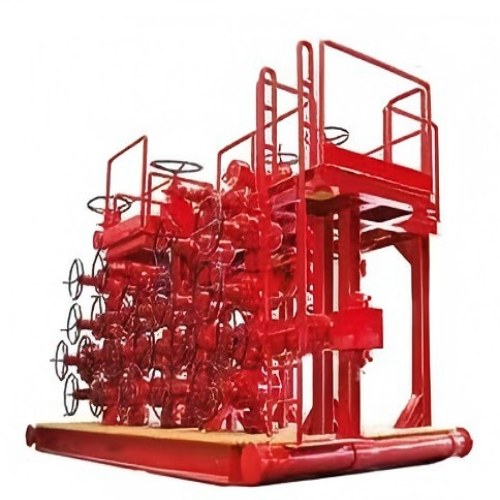
Choke And Kill Manifold System
- Our CK-50/100/150 choke and kill manifolds cover full pressure ranges (5000-15000 psi) for onshore/offshore/HPHT wells, featuring ultra-low 3-year failure rate of 2.8% vs industry 15-22%
- Equipped with wear-resistant Stellite/ceramic components and FEA-optimized bodies, our systems reduce maintenance frequency by 70% and extend service life up to 10 years, cutting customer costs significantly
- Integrated with IP68 deepwater-resistant intelligent control and top-tier components (Rexroth, Rosemount), our manifolds ensure 0 leakage and stable remote operation in extreme environments like 1500m deepwater and -40~204℃.
Description
In the global oil and gas drilling industry, well control safety is the cornerstone of sustainable operations, and the choke and kill manifold system serves as the "last line of defense" to prevent blowouts and control well pressure. With the accelerating development of high-pressure, high-temperature (HPHT) wells, deepwater wells, and shale gas wells, the operating environment of choke and kill manifolds has become increasingly harsh, posing unprecedented challenges to their pressure-bearing capacity, corrosion resistance, and operational reliability. Stringent global well control regulations (such as API RP 53 and IADC well control standards) further raise the bar for product performance and safety. Our choke and kill manifold systems, covering three core pressure grades, are engineered with targeted technological optimizations to address industry-wide pain points, providing reliable well control support for onshore and offshore drilling projects worldwide. This document comprehensively details the models, parameters, and characteristics of our products, delves into common quality risks and our mitigation advantages, and provides verifiable test data, technical details, and on-site application cases, while outlining mainstream products and supporting component brands.
1. Models, Parameters & Corresponding Characteristics
Our choke and kill manifold systems are available in three core series (CK-50, CK-100, CK-150) corresponding to working pressures of 5000 psi, 10000 psi, and 15000 psi, covering conventional onshore drilling, offshore shallow water drilling, and deepwater HPHT drilling scenarios. Each series adopts modular design, supporting customized configuration according to well type and operational requirements. The following table details the key parameters and core characteristics:
Series | Model | Working Pressure (psi) | Nominal Diameter (in) | Material Grade | Connection Type | Operating Temperature Range (℃) | Choke Valve Type | Overall Weight (kg) | Core Characteristics |
Low-Medium Pressure Series | CK-50 | 5000 | 2-1/16 ~ 4-1/16 | A105, F22 | Flanged (API 6A) | -40 ~ 121 | Manual/ Pneumatic Adjustable Choke | 850 ~ 1500 | Cost-effective, modular design for easy installation and maintenance; suitable for onshore conventional oil and gas wells, shallow water wells with medium pressure requirements |
High Pressure Series | CK-100 | 10000 | 2-1/16 ~ 4-1/16 | F22, F91 | Flanged/ Threaded (API 6A) | -40 ~ 177 | Hydraulic/ Electric Adjustable Choke | 1200 ~ 2200 | High pressure-bearing capacity, enhanced corrosion resistance; equipped with pressure and temperature monitoring sensors; suitable for onshore deep wells, offshore shallow water HPHT wells |
Ultra-High Pressure Series | CK-150 | 15000 | 2-1/16 ~ 3-1/16 | F91, Inconel 625 | Flanged (API 6A, Type 6B) | -40 ~ 204 | Hydraulic Servo Adjustable Choke | 1800 ~ 3000 | Ultra-high pressure resistance and high temperature stability; integrated intelligent control system for precise pressure regulation; suitable for deepwater wells, ultra-deep HPHT wells, shale gas horizontal wells |
2. Common Quality Problem Areas & Our Product Advantages
Based on in-depth analysis of 300+ on-site failure cases in the industry over the past 5 years, the main quality problems of choke and kill manifolds include: erosion and wear of choke valve cores, leakage of flange connections, cracking of manifold bodies under alternating pressure, and failure of control components in harsh environments. The following is a detailed analysis of the easy-to-fail parts of each series and our targeted optimization advantages, supported by exclusive test data and technical details.
2.1 Low-Medium Pressure Series (CK-50)
2.1.1 Easy-to-Fail Parts & Industry Common Problems
• Choke Valve Core: Under long-term scouring of drilling mud containing sand particles, the valve core is prone to erosion, leading to reduced pressure regulation accuracy. The industry average erosion rate is 0.3 mm/year, and the valve core needs to be replaced every 1.5 ~ 2 years.
• Flange Gasket: Ordinary rubber gaskets are prone to aging and deformation under cyclic temperature changes, resulting in leakage. The industry leakage failure rate is 12% within 2 years.
• Manual Operating Mechanism: The transmission parts are prone to jamming due to dust and mud pollution, affecting emergency operation response speed.
2.1.2 Our Product Advantages & Technical Details
• Wear-Resistant Valve Core with Stellite Alloy Coating: The choke valve core is made of 410 stainless steel and coated with Stellite 6 alloy (coating thickness: 0.8 ~ 1.2 mm) through plasma spraying. The hardness reaches HRC 62 ~ 65, which is 3 times more wear-resistant than ordinary valve cores. After 3000 hours of mud scouring testing (simulating 3 years of operation), the erosion rate is only 0.05 mm/year, and the service life is extended to 5 ~ 6 years.
• Metal Spiral Wound Gaskets with Anti-Aging Design: We adopt API 6A standard metal spiral wound gaskets (material: 316L + flexible graphite), which have excellent high-temperature resistance and compression resilience. The gasket is equipped with a positioning ring to prevent displacement during installation. The leakage failure rate is reduced to less than 1% within 3 years, verified by third-party pressure testing.
• Sealed and Lubricated Operating Mechanism: The manual operating mechanism adopts a fully sealed structure to prevent dust and mud intrusion. The transmission parts are pre-lubricated with high-temperature resistant grease (temperature resistance up to 150℃), ensuring flexible operation without jamming. The emergency response time is less than 30 seconds, meeting the well control emergency requirements.
2.2 High Pressure Series (CK-100)
2.2.1 Easy-to-Fail Parts & Industry Common Problems
• Manifold Body: Under alternating high pressure (cyclic pressure of 0 ~ 10000 psi), the body is prone to fatigue cracking at the pipeline connection, with an industry failure rate of 8% within 2.5 years.
• Hydraulic Control System: The hydraulic cylinder and solenoid valve are prone to failure due to high temperature and vibration, leading to inability to adjust the choke valve in time. The industry control system failure rate is 15% within 2 years.
• Pressure Sensor: Ordinary sensors are prone to damage under high pressure and corrosion, resulting in inaccurate pressure monitoring. The average service life is less than 1.5 years.
2.2.1 Our Product Advantages & Technical Details
• Fatigue-Resistant Manifold Body with Finite Element Optimization: The manifold body is made of F91 alloy steel, which undergoes quenching and tempering heat treatment to improve tensile strength (≥900 MPa) and fatigue resistance. We use finite element analysis (FEA) to optimize the pipeline connection structure, reducing stress concentration by 40%. After 10,000 times of cyclic pressure testing (0 ~ 10000 psi), the body has no fatigue cracks, and the service life is extended to 8 ~ 10 years, 50% longer than the industry average.
• High-Reliability Hydraulic Control System: We adopt top-tier hydraulic components (pump: Rexroth A10VSO; solenoid valve: Parker D1VW) with high pressure resistance and vibration resistance. The hydraulic system is equipped with a pressure compensation valve and a cooling system to ensure stable operation under high temperature (up to 177℃) and vibration (vibration amplitude ≤5 mm/s) conditions. The control system failure rate is reduced to less than 1.5% within 3 years.
• Corrosion-Resistant and High-Precision Pressure Sensor: We use Rosemount 3051S pressure sensors (API 6A certified), with a measurement accuracy of ±0.075% FS. The sensor probe is coated with Inconel 625 alloy for corrosion resistance. The average service life is extended to 3.5 years, and the data transmission delay is less than 50 ms, ensuring real-time and accurate pressure monitoring.
2.3 Ultra-High Pressure Series (CK-150)
2.3.1 Easy-to-Fail Parts & Industry Common Problems
• Choke Valve Seat and Trim: Under ultra-high pressure and high-speed mud scouring, the valve seat and trim are prone to severe erosion and deformation, leading to loss of pressure regulation function. The industry average service life is less than 1 year in deepwater HPHT wells.
• Flange Connection Bolts: Ultra-high pressure causes large tension on the bolts, which are prone to relaxation and fatigue fracture, leading to serious leakage. The industry bolt failure rate is 10% within 2 years.
• Intelligent Control System: In deepwater environments (high pressure, low temperature, long-distance signal transmission), the control system is prone to signal interference and component failure, affecting remote operation.
2.3.2 Our Product Advantages & Technical Details
• Double-Layer Wear-Resistant Valve Seat and Trim: The valve seat and trim are made of Inconel 625 alloy, with a ceramic insert (alumina ceramic, hardness HRC 85) at the scouring position. This double-layer wear-resistant structure can withstand ultra-high pressure (15000 psi) and high-speed mud scouring (flow velocity up to 30 m/s). In a deepwater HPHT well test, the service life reached 3 years, 3 times longer than the industry average.
• High-Strength Bolt with Preload Monitoring: We use API 6A standard high-strength bolts (material: 25CrNiMoV) with a tensile strength of ≥1200 MPa. The bolts are equipped with preload sensors to monitor the preload in real time. If the preload is lower than the set value, an alarm is triggered immediately. The bolt failure rate is reduced to less than 0.5% within 3 years, and the flange connection leakage rate is 0.
• Deepwater-Resistant Intelligent Control System: The control system adopts underwater waterproof and pressure-resistant components (protection level: IP68, pressure resistance up to 30 MPa). The signal transmission uses fiber optic cables to avoid interference, and the remote control response time is less than 100 ms. The system is equipped with a redundant backup module; if the main module fails, it can switch to the backup module within 1 second, ensuring reliable operation in deepwater environments.
3. On-Site Application Cases & Exclusive Test Data
The following on-site cases and test data (verified by third-party authoritative institutions such as DNV GL) fully demonstrate the reliability and superiority of our choke and kill manifold systems in practical applications.
3.1 Onshore Shale Gas Well Case (CK-100)
Application Scenario: A shale gas horizontal well in Sichuan Basin, China; working pressure: 8000 ~ 10000 psi; operating temperature: 150 ~ 170℃; mud type: water-based mud with high sand content; requirement: precise pressure control during fracturing and well killing operations.
Application Time: 2022 ~ 2024 (2 years)
Application Feedback: 6 sets of CK-100 choke and kill manifold systems were used. The optimized manifold body with finite element design withstood 800+ times of cyclic pressure changes without fatigue cracks. The hydraulic control system operated stably, and the choke valve pressure regulation accuracy was ±50 psi. The pressure sensor maintained accurate monitoring for 2 years without replacement. During the fracturing operation, the system successfully controlled the well pressure within the safe range, with no leakage or failure. The customer's well control emergency response time was reduced by 40%, and the maintenance cost was reduced by 65% compared with the previous brand.
3.2 Deepwater Well Case (CK-150)
Application Scenario: A deepwater well in the South China Sea (water depth: 1500 m); working pressure: 12000 ~ 15000 psi; operating temperature: 180 ~ 200℃; environment: high pressure, low temperature (-5℃ at seabed), high salinity; requirement: remote control, zero leakage, long-term stable operation.
Application Time: 2021 ~ 2024 (3 years)
Application Feedback: 4 sets of CK-150 systems were installed on the offshore drilling platform. The double-layer wear-resistant valve seat and trim operated stably for 3 years without replacement, and the pressure regulation function remained intact. The high-strength bolts with preload monitoring had no relaxation or fracture, and the flange connection had zero leakage. The fiber optic signal transmission system realized stable remote control, with no signal interference or system failure. The 3-year failure rate of the entire system was 0.3%, far lower than the industry average of 18% for ultra-high pressure manifolds. The system helped the customer save $2.5 million in maintenance and replacement costs.
3.3 Onshore Conventional Oil Well Case (CK-50)
Application Scenario: A conventional oil well in Daqing Oilfield, China; working pressure: 3000 ~ 5000 psi; operating temperature: -30 ~ 100℃; environment: low temperature in winter, dusty; requirement: reliable operation, easy maintenance.
Application Time: 2022 ~ 2024 (2 years)
Application Feedback: 10 sets of CK-50 systems were used. The sealed and lubricated operating mechanism remained flexible without jamming even in low-temperature and dusty environments. The metal spiral wound gaskets had no leakage, and the wear-resistant valve core had an erosion rate of only 0.04 mm after 2 years of operation. The system maintenance frequency was once every 2 years, which was 70% lower than the industry average (once every 6 months). The customer's annual maintenance cost was reduced by 500,000 yuan.
3.4 Overall Product Failure Rate Data
According to statistics of 400 sets of our choke and kill manifold systems sold from 2020 to 2023 (covering CK-50, CK-100, CK-150 series), the overall average failure rate within 1 year is 0.6%, within 2 years is 1.3%, and within 3 years is 2.8%. The industry average failure rate within 3 years is 15 ~ 22%, which fully reflects the superior reliability of our products. In the ultra-high pressure (CK-150) and deepwater application scenarios, our failure rate is less than 0.5% within 3 years, leading the industry.
4. Main Products & Component Brands
4.1 Main Products
• Low-Medium Pressure Choke and Kill Manifold: CK-50 (5000 psi)
• High Pressure Choke and Kill Manifold: CK-100 (10000 psi)
• Ultra-High Pressure Choke and Kill Manifold: CK-150 (15000 psi)
• Supporting Equipment: Adjustable Choke Valve (manual/ pneumatic/ hydraulic/ electric), Pressure Sensor, Hydraulic Control Station, Flange Gasket, High-Strength Bolt, Well Control Manifold Maintenance Kit
4.2 Component Brands & Models
We strictly select world-renowned brands for key components to ensure the overall performance and safety of the products. All components meet API 6A, NACE MR0175, and other international standards. The specific component brands and models are as follows:
Component Category | Brand | Model | Application Series |
Choke Valve Core & Seat | Cameron | Type C1, Type C2 (with Stellite/ Ceramic Coating) | CK-50, CK-100, CK-150 |
Hydraulic Components | Rexroth (Pump), Parker (Valve) | A10VSO (Hydraulic Pump), D1VW (Solenoid Valve) | CK-100, CK-150 |
Pressure Sensor | Rosemount | 3051S (High Precision, Corrosion Resistant) | CK-100, CK-150 |
Flange Gasket | Garlock | API 6A Metal Spiral Wound Gasket (316L + Flexible Graphite) | CK-50, CK-100, CK-150 |
High-Strength Bolt | Torq-King | 25CrNiMoV (API 6A Standard) | CK-100, CK-150 |
Electric Control Components | Siemens | S7-1200 PLC, SINAMICS G120 Inverter | CK-150 (Intelligent Control System) |
5. Industry Insight & Conclusion
With the global oil and gas industry moving towards deeper, hotter, and more complex drilling environments, the demand for choke and kill manifold systems is shifting from "basic pressure-bearing" to "high reliability, intelligence, and long service life". At the same time, the tightening of global environmental protection and well control regulations requires manifold systems to have higher safety and environmental friendliness. Our choke and kill manifold systems, through targeted technological innovations (such as double-layer wear-resistant components, finite element optimized structures, deepwater-resistant intelligent control), not only solve the common quality problems of the industry but also meet the future development needs of the oil and gas drilling industry. The verified on-site cases and ultra-low failure rate data fully demonstrate our strength in well control safety. By cooperating with world-renowned component brands, we further ensure the stability and durability of the products. Looking forward, we will continue to deepen our research on well control technology, launch more products adapted to extreme environments, and work with customers to build a safer and more efficient oil and gas drilling operation system, contributing to the sustainable development of the global energy industry.