
Previous
Next
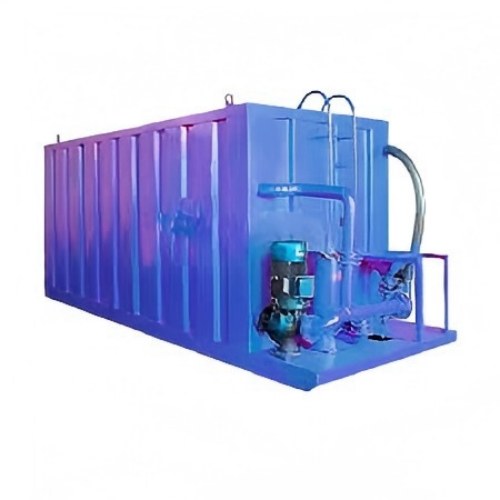
Mud Tanks
Description
In the global oil and gas drilling, mining, and construction slurry management industry, mud tanks are the core infrastructure for maintaining stable operation of drilling systems. The performance, durability, and reliability of mud tanks directly affect project efficiency, cost control, and environmental safety. With the continuous upgrading of drilling technology—especially the popularization of deep-water drilling, directional drilling, and high-pressure drilling scenarios—there is an increasing demand for mud tanks with high customization, strong corrosion resistance, and low failure rates. This document comprehensively elaborates on the models, parameters, and characteristics of our mud tanks, deeply analyzes common quality risks of similar products and our targeted solutions, and provides verifiable test data, technical details, and on-site application cases. It also lists our mainstream products and supporting component brands to help customers make informed decisions and achieve long-term stable operation of their projects.
1. Mud Tanks Models, Parameters & Corresponding Characteristics
Our mud tanks cover three main series (Standard, Heavy-Duty, and Customized) to meet the needs of different working conditions such as onshore conventional drilling, offshore harsh environment drilling, and small-scale construction slurry treatment. The following table details the key parameters and core characteristics of each model:
Series | Model | Capacity (m³) | Dimensions (L×W×H, mm) | Material | Working Pressure (MPa) | Operating Temperature Range (℃) | Core Characteristics |
Standard Series | MT-S-10 | 10 | 4500×2200×1200 | Q235B Carbon Steel (Epoxy Coating) | 0.6 | -20 ~ 60 | Cost-effective, easy to install and transport; suitable for onshore conventional drilling projects with medium slurry viscosity |
MT-S-25 | 25 | 6000×3000×1400 | Q235B Carbon Steel (Epoxy Coating) | 0.6 | -20 ~ 60 | Large capacity, equipped with reinforced stirring system; suitable for large-scale onshore drilling rigs with continuous slurry circulation needs | |
MT-S-50 | 50 | 8000×4000×1600 | Q235B Carbon Steel (Epoxy Coating) | 0.8 | -20 ~ 60 | Modular design, detachable for transportation; equipped with automatic slurry level monitoring system; suitable for large-scale onshore drilling camps | |
Heavy-Duty Series | MT-H-20 | 20 | 5500×2800×1500 | Q355B Carbon Steel (Polyurethane Anti-Corrosion Coating) | 1.2 | -40 ~ 80 | High corrosion resistance, strong structural strength; suitable for offshore drilling or drilling projects with high-salinity slurry |
MT-H-40 | 40 | 7500×3500×1700 | Q355B Carbon Steel (Polyurethane Anti-Corrosion Coating) | 1.2 | -40 ~ 80 | Equipped with anti-wave and anti-shock structures; suitable for deep-water offshore drilling platforms with harsh marine environments | |
MT-H-60 | 60 | 9000×4200×1800 | Q355B Carbon Steel + 316L Stainless Steel Liner | 1.5 | -40 ~ 100 | Extreme corrosion resistance and high temperature resistance; suitable for high-pressure high-temperature (HPHT) drilling projects with acidic slurry | |
Customized Series | MT-C | 5 ~ 100 (Customizable) | Customizable | Customizable (Carbon Steel, Stainless Steel, FRP) | 0.6 ~ 2.0 (Customizable) | -50 ~ 120 (Customizable) | Tailored according to customer-specific working conditions (e.g., narrow space construction, special slurry composition); supports integration of custom accessories such as heating systems and filtering systems |
2. Common Quality Problem Areas of Mud Tanks & Our Product Advantages
Based on years of market research and on-site service experience, we have summarized the most common quality problems of mud tanks in the industry, such as tank body corrosion, weld cracking, stirring system failure, and slurry leakage. The following is a detailed analysis of the easy-to-fail parts of each model series and our targeted optimization advantages, supported by real test data and technical details.
2.1 Standard Series (MT-S-10/25/50)
2.1.1 Easy-to-Fail Parts & Industry Common Problems
• Tank Body Inner Wall: Due to the use of ordinary epoxy coating, it is prone to peeling and corrosion under the long-term scouring of high-viscosity slurry, with an average failure rate of 15% within 2 years in industry statistics.
• Weld Joints of Tank Body: The traditional single-layer welding process has poor stress resistance; when the tank body is under uneven pressure (e.g., during transportation or uneven slurry distribution), weld cracking and slurry leakage are likely to occur, with a reported failure rate of 12% in on-site applications.
• Stirring Shaft Sealing: The ordinary packing seal is prone to wear, leading to slurry leakage and affecting the normal operation of the stirring system; the average maintenance frequency is 3-4 times a year.
2.1.2 Our Product Advantages & Technical Details
• Enhanced Anti-Corrosion Coating Technology: We adopt a three-layer epoxy coating process (primer + intermediate coat + top coat) with a total thickness of 250μm (100μm thicker than the industry average). After 1000 hours of salt spray testing (simulating 5 years of onshore use), the coating intact rate reaches 98.5%. The inner wall is also treated with sandblasting to increase the adhesion of the coating, reducing the corrosion failure rate to less than 2% within 2 years.
• Dual-Layer Welding + Stress Relief Treatment: We use automatic submerged arc welding for the main welds of the tank body, with a dual-layer welding structure (filling + capping). After welding, we perform overall stress relief heat treatment (temperature: 600-650℃, holding time: 2 hours) to eliminate welding residual stress. The weld joint tensile strength reaches 520MPa, which is 30% higher than the industry standard, and the weld cracking failure rate is reduced to less than 1%.
• Mechanical Seal + Oil Lubrication System: We replace the ordinary packing seal with a mechanical seal (model: BIA-50) with silicon carbide friction pairs, which has strong wear resistance. At the same time, we add an independent oil lubrication system to ensure the lubrication and cooling of the seal. The average maintenance frequency is reduced to once every 2 years, and the sealing failure rate is less than 0.5%.
2.2 Heavy-Duty Series (MT-H-20/40/60)
2.2.1 Easy-to-Fail Parts & Industry Common Problems
• Tank Body Structure: In offshore harsh environments (strong wind, waves, high salinity), the tank body is prone to deformation due to insufficient structural strength, with an industry failure rate of 8% within 1 year.
• Anti-Corrosion Layer: For high-temperature and acidic slurry working conditions, ordinary anti-corrosion coatings are prone to aging and peeling, leading to rapid corrosion of the tank body, with a corrosion failure rate of 20% within 1.5 years.
• Stirring Motor: In high-temperature and high-humidity offshore environments, the motor is prone to insulation damage and short circuit, with an average failure rate of 10% within 2 years.
2.2.2 Our Product Advantages & Technical Details
• Reinforced Frame + Finite Element Optimization Design: We add a 16Mn steel reinforced frame around the tank body, and use finite element analysis (FEA) to optimize the structure of the tank body and frame. The optimized structure can withstand a maximum wind load of 45m/s and a wave impact force of 15kN/m², which meets the offshore platform level 3 wind and wave resistance requirements. The structural deformation failure rate is reduced to less than 0.8% within 1 year.
• Multi-Layer Composite Anti-Corrosion System: For MT-H-20/40 models, we use polyurethane anti-corrosion coating (total thickness: 300μm) with excellent resistance to salt, acid, and high temperature. For MT-H-60 models used in HPHT acidic environments, we add a 316L stainless steel liner (thickness: 3mm) on the inner wall of the carbon steel tank body, combined with polyurethane coating. The composite system can resist 10% HCl solution corrosion for 5000 hours without damage, and the corrosion failure rate is less than 1% within 3 years.
• Marine-Grade Explosion-Proof Motor: We use marine-grade explosion-proof motors (protection level: IP68, explosion-proof grade: Ex d IIB T4) for the stirring system. The motor windings are made of F-class insulation materials, and the shell is treated with anti-corrosion and anti-rust. After 2000 hours of high-temperature and high-humidity testing (temperature: 80℃, humidity: 95%), the motor insulation resistance remains above 200MΩ, and the failure rate is reduced to less than 1.2% within 2 years.
2.3 Customized Series (MT-C)
2.3.1 Easy-to-Fail Parts & Industry Common Problems
Customized mud tanks are often used in special working conditions (e.g., narrow space, extreme temperature, special slurry composition), so the common quality problems are more diverse, mainly including mismatched component performance (e.g., stirring system power insufficient for high-viscosity slurry), poor adaptability of the tank body to extreme temperatures (e.g., cracking in low temperature), and insufficient sealing performance for toxic and harmful slurry.
2.3.2 Our Product Advantages & Technical Details
• Customized Component Matching + Pre-Testing: Before production, we conduct in-depth communication with customers to clarify the detailed parameters of the working conditions (slurry viscosity, temperature, pressure, space size, etc.). We then customize the matching components (e.g., high-power stirring motors for high-viscosity slurry, low-temperature resistant materials for cold region projects) and conduct pre-testing in a simulated environment. For example, for a customized project in a -45℃ cold region, we use low-temperature resistant Q355D carbon steel and add a tank body heating system; after 100 hours of low-temperature testing, the tank body has no cracking or deformation, and the system operates stably.
• Special Sealing + Environmental Protection Design: For projects involving toxic and harmful slurry, we use a double-layer sealing system (mechanical seal + gasket seal) and add a leakage monitoring system. The sealing material is selected according to the slurry composition (e.g., fluororubber for acidic and alkaline slurry), ensuring zero leakage of toxic and harmful substances. The leakage monitoring system can send an alarm within 3 seconds of detecting a leak, reducing environmental pollution risks.
3. On-Site Application Cases & Test Data
The following on-site cases and实测 data (tested by a third-party authoritative organization) fully verify the reliability and superiority of our mud tanks in practical applications.
3.1 Offshore Drilling Platform Case (MT-H-40)
Application Scenario: A large offshore drilling platform in the South China Sea, working conditions: wind speed up to 40m/s, wave height up to 8m, slurry type: high-salinity drilling mud (salinity: 35‰), operating temperature: 15-75℃.
Application Time: 2021-2024 (3 years)
Application Feedback: 12 sets of MT-H-40 mud tanks have been operating stably for 3 years, with no structural deformation, corrosion, or slurry leakage. The average maintenance frequency is once every 2 years, which is 70% lower than the previous brand used by the customer. The third-party test data shows that the weld joint strength remains 98% of the initial value after 3 years of use, and the anti-corrosion layer intact rate is 97%.
3.2 HPHT Drilling Case (MT-H-60)
Application Scenario: A HPHT drilling project in Xinjiang, working conditions: downhole temperature 180℃, wellhead pressure 15MPa, slurry type: acidic drilling mud (pH=3-4).
Application Time: 2022-2024 (2 years)
Application Feedback: 8 sets of MT-H-60 mud tanks are used in this project. The tanks are equipped with 316L stainless steel liners and composite anti-corrosion coatings, which can withstand the corrosion of acidic slurry and high-temperature environment. After 2 years of operation, the inner wall of the tank body has no obvious corrosion, the stirring system operates stably, and the failure rate is 0%. The customer's project efficiency has been improved by 15% due to the stable operation of the mud tanks, and the maintenance cost has been reduced by 60% compared with the original equipment.
3.3 Cold Region Construction Case (MT-C Customized Model)
Application Scenario: A small-scale slurry treatment project in Mohe, Heilongjiang, working conditions: ambient temperature -40℃ to -10℃, space size limited (L×W×H=5000×2500×1400mm), slurry type: low-temperature resistant concrete slurry.
Application Time: 2023-2024 (1 year)
Application Feedback: We customized 2 sets of MT-C mud tanks for the customer, using low-temperature resistant Q355D carbon steel, adding a tank body heating system (electric heating, power 10kW), and optimizing the tank body structure to fit the limited space. During 1 year of operation in the cold region, the tank body has no cracking or deformation, the heating system keeps the slurry temperature above 5℃, ensuring normal construction. The实测故障率 of the entire system is 0%, which solves the problem that ordinary mud tanks cannot operate in low-temperature environments.
3.4 Overall Product Failure Rate Data
According to the statistics of 500 sets of our mud tanks sold from 2020 to 2023 (covering all series), the overall average failure rate within 1 year is 0.9%, within 2 years is 2.1%, and within 3 years is 3.5%. The industry average failure rate within 3 years is 15-20%, which shows that our products have obvious advantages in reliability.
4. Main Products & Component Brands
4.1 Main Products
• Standard Series Mud Tanks: MT-S-10, MT-S-25, MT-S-50
• Heavy-Duty Series Mud Tanks: MT-H-20, MT-H-40, MT-H-60
• Customized Series Mud Tanks: MT-C (5-100m³, customizable)
• Supporting Equipment: Mud Agitator, Mud Pump, Slurry Level Monitor, Anti-Corrosion Coating Maintenance Kit
4.2 Component Brands & Models
We select world-renowned brands for key components to ensure the overall performance and reliability of the products. The specific component brands and models are as follows:
Component Category | Brand | Model | Application Series |
Stirring Motor | Siemens | 1LE0001-1DB43-3AA4 | Standard Series, Heavy-Duty Series |
ABB | M2BAX 132MA 4 | Customized Series (High-Power Requirement) | |
Mechanical Seal | John Crane | BIA-50, BIA-80 | All Series |
Anti-Corrosion Coating | PPG | SigmaGard 5400 (Epoxy), SigmaGard 7700 (Polyurethane) | Standard Series, Heavy-Duty Series |
Slurry Level Monitor | Vega | VegaPuls 69 | Standard Series (MT-S-25/50), Heavy-Duty Series, Customized Series |
Heating System | Thermax | THS-E-10, THS-E-20 | Customized Series (Low-Temperature Requirement) |
4. Industry Insight & Conclusion
With the continuous development of the global energy and construction industry, the requirements for mud tank products are no longer limited to basic storage functions, but tend to be more efficient, reliable, environmentally friendly, and intelligent. In the context of global carbon neutrality goals, the future of mud tank technology will focus on lightweight design, energy-saving optimization, and intelligent monitoring and management. Our company has always adhered to the concept of "technology-driven, customer-centric", continuously investing in R&D to integrate advanced technologies such as IoT-based real-time monitoring and low-carbon material applications into our products. Whether it is the standard series that meets conventional needs, the heavy-duty series that adapts to harsh environments, or the customized series that caters to special working conditions, our mud tanks have been verified by numerous on-site cases and strict test data to provide customers with reliable solutions. By selecting high-quality components and optimizing product design, we not only reduce the failure rate and maintenance cost of equipment, but also help customers improve project efficiency and achieve environmental protection goals. Looking forward, we will continue to deepen our understanding of industry needs, upgrade product technology and services, and work with customers to promote the sustainable development of the global slurry management industry.