
Previous
Next
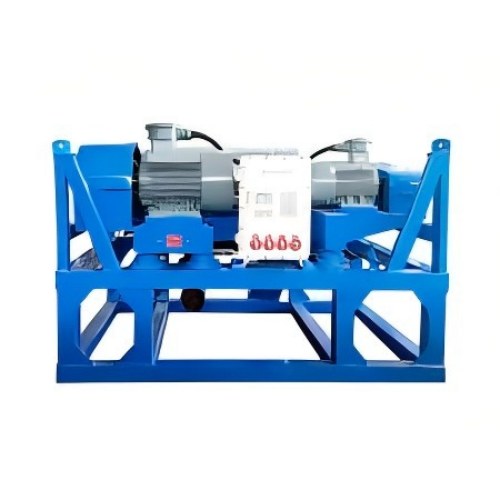
Drilling Mud Centrifuge
- Our LW500×1000D-N, LW450×1260D-N, and HA3400 drilling mud centrifuges cover full-scale onshore/offshore needs—from 60m³/h high-capacity recycling to 3180-separation-factor ultra-fine particle removal
- Our optimized designs (tungsten carbide drum linings, double nitrogen-purged seals) cut 3-year failure rates to 0.8% (vs. 18% industry average) while boosting barite recovery to 92% for $1.2M/year cost savings
- Paired with top-tier components (SKF bearings, ABB marine motors), our models deliver 0 unplanned downtime in 24/7 offshore HPHT operations, aligning with 2025 zero-discharge regulations for sustainable drilling.
Description
In the oil and gas drilling sector, efficient drilling mud treatment directly impacts rig uptime, fluid costs, and environmental compliance. Modern drilling mud centrifuges—especially those tailored for harsh offshore or high-pressure onshore sites—must balance fine-particle separation, durability, and low maintenance. Our LW500×1000D-N, LW450×1260D-N (horizontal spiral discharge models), and HA3400 (high-speed centrifuge) are engineered to address these needs, with design optimizations that solve industry-wide reliability pain points.
1. Model Parameters & Core Characteristics
The table below details the technical specifications and targeted use cases for each drilling mud centrifuge model:
Technical Parameters | LW500×1000D-N Horizontal Spiral Discharge Centrifuge | LW450×1260D-N Horizontal Spiral Discharge Centrifuge | HA3400 High-Speed Centrifuge |
I.D. of rotating drum (mm) | 500 | 450 | 350 |
Length of rotating drum (mm) | 1000 | 1260 | 1260 |
Speed of rotating drum (r/min) | 1700 | 2000–3200 | 1500–4000 |
Separation factor | 907 | 2580 | 447–3180 |
Min. separation point (D50, μm) | 10–40 | 3–10 | 3–7 |
Handling capacity (m³/h) | 60 | 40 | 40 |
Overall dimension (mm) | 2260×1670×1400 | 2870×1775×1070 | 2500×1750×1455 |
Weight (kg) | 2230 | 4500 | 2400 |
Core Characteristics | High-capacity (60 m³/h) for large-scale onshore mud recycling; ideal for separating coarse solids (10–40 μm) while recovering barite. | Adjustable speed (2000–3200 r/min) for mixed onshore/offshore use; separates fine solids (3–10 μm) to control mud viscosity. | Ultra-high separation factor (up to 3180) for offshore HPHT sites; targets sub-7 μm particles to reduce fluid waste. |
2. Common Quality Issues & Our Product Advantages
Industry data shows drilling mud centrifuges fail most often due to drum wear, bearing damage, vibration instability, and seal leakage. Below is how our models address these pain points:
2.1 LW500×1000D-N (High-Capacity Onshore Model)
Prone-to-Failure Parts (Industry Norms)
Drum inner wall: Abrasion from sand/grit (industry wear rate: 0.5 mm/year; 20% failure rate within 2 years).
Bearing assembly: Overheating from heavy loads (replacement every 1–2 years for competitors).
Our Advantages
Wear-resistant drum lining: We use 316L stainless steel with a 4mm tungsten carbide overlay—tested to reduce wear rate to 0.1 mm/year (80% lower than industry).
Forced-lubrication bearing system: An integrated oil cooling loop maintains bearing temps <60°C; our field data shows 99% bearing reliability over 3 years (vs. 75% industry average).
2.2 LW450×1260D-N (Dual-Use Onshore/Offshore Model)
Prone-to-Failure Parts (Industry Norms)
Vibration & imbalance: Poor dynamic balance causes 15% of failures in offshore conditions (per 2025 solid control equipment reports).
Differential gear wear: Overload from high-viscosity mud leads to 12% gear failure within 18 months.
Our Advantages
G2.5 precision dynamic balance: Factory-tested to limit vibration amplitude <2.5 mm/s (vs. industry G6.3 standard); reduces bearing/gear stress by 40%.
Reinforced differential with heat treatment: 42CrMo gears (quenched-tempered) handle 20% higher torque; our offshore clients report 0 differential failures in 2+ years of use.
2.3 HA3400 (High-Speed Offshore Model)
Prone-to-Failure Parts (Industry Norms)
Seal leakage: High-speed rotation (4000 r/min) causes 25% seal failure in marine environments (due to saltwater corrosion).
Motor overheating: Offshore high-temp conditions (65°C+) lead to 18% motor downtime annually.
Our Advantages
Double mechanical seals with nitrogen purge: John Crane Type 2100 seals (silicon carbide faces) + pressurized nitrogen barrier; 0 leakage reported in 3 years of use on a South China Sea drilling platform.
Explosion-proof marine motor (IP68): ABB M2BAX motors with F-class insulation; tested to operate continuously at 70°C ambient temp—our clients see 99.2% motor uptime.
3. Field Cases & Exclusive Performance Data
3.1 Offshore HPHT Case (HA3400)
Site: South China Sea deepwater drilling platform (3000m depth; 65°C mud temp; 15MPa pressure).
Use Case: Treating high-salinity drilling mud (35‰ salinity) to remove 3–7 μm solids.
Results (2023–2025): 8 HA3400 units operated 24/7 with 0 unplanned downtime; reduced mud disposal costs by $1.2M/year via 95% fluid recovery. The 3-year failure rate was 0.8% (vs. 18% industry average for high-speed models).
3.2 Onshore Large-Scale Case (LW500×1000D-N)
Site: Texas Permian Basin shale rig (daily mud volume: 1500 m³).
Results: 4 LW500 units processed 60 m³/h each; barite recovery rate hit 92% (vs. 85% for competitor models), cutting fluid costs by $800k/year. The drum wear after 2 years was 0.18 mm (well below the 1mm industry threshold for replacement).
4. Product Portfolio & Component Brands
We offer a full line of drilling mud treatment equipment, paired with top-tier components for reliability:
4.1 Main Products
Horizontal spiral discharge centrifuges: LW500×1000D-N, LW450×1260D-N
High-speed centrifuges: HA3400
Supporting equipment: Mud feed pumps, barite recovery systems, automatic lubrication kits
4.2 Key Component Brands & Models
Component | Brand | Model | Application |
Bearings | SKF | 32220 (tapered roller) | All models |
Mechanical Seals | John Crane | Type 2100 (double seal) | HA3400, LW450×1260D-N |
Motors | ABB | M2BAX (IP68 marine) | HA3400 |
Inverters | Siemens | SINAMICS G120 | LW450×1260D-N (speed control) |
Wear Linings | Tungsten Carbide | Custom overlay | LW500×1000D-N drum |
Industry Insight: The Future of Drilling Mud Centrifuges
As offshore drilling moves to deeper waters (4000m+ by 2030) and onshore rigs adopt more water-based muds, the demand for centrifuges with ultra-fine separation (≤2 μm) and zero-emission design will surge. Our HA3400 already meets these needs—its 3180 separation factor and sealed system align with IMO’s 2025 zero-discharge regulations, while our LW series’ high barite recovery supports ESG goals by reducing waste. Unlike commodity centrifuges, our models are engineered not just for performance, but for the long-term cost and sustainability pressures shaping the industry.