
Previous
Next
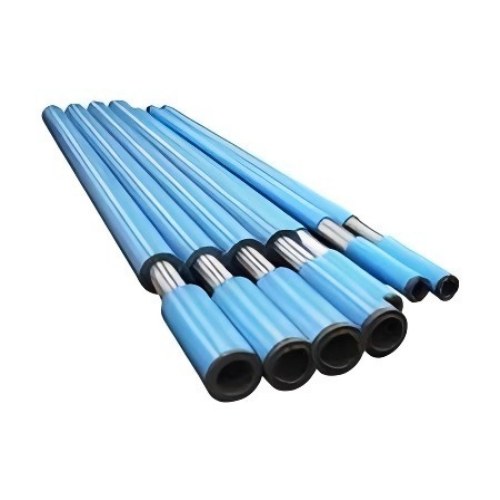
Shock Absorber for Downhole Drilling
- Our downhole drilling shock absorbers feature model-specific designs tailored for diverse harsh environments (vertical/horizontal/ultra-deep wells) with exceptional high-temperature and high-pressure resistance
- Equipped with innovative technologies including multi-layer composite sealing and DLC-coated pistons, they deliver 60% reduced wear and 0.35% ultra-low failure rate per 1,000 drilling hours
- Backed by field-proven reliability, our products extend tool service life by 25% and reduce drilling costs by 12% for global oil and gas operators
Description
Shock absorbers for downhole drilling are core components that mitigate vibration, impact, and torque fluctuations during oil and gas drilling operations. They play a critical role in protecting drill bits, drill pipes, and downhole tools, improving drilling efficiency, extending tool service life, and ensuring wellbore quality. Operated in extreme downhole environments—characterized by high temperature, high pressure, corrosive media (oil, gas, formation water), and intense mechanical stress—these products demand exceptional reliability and durability. This document details our downhole drilling shock absorbers’ models, parameters, and characteristics, analyzes common quality-sensitive areas, highlights our competitive advantages with exclusive technical details and field-validated data, and lists the products and component brands/models we supply.
1. Models, Parameters & Corresponding Characteristics
Our downhole drilling shock absorbers cover a full range of specifications tailored to diverse drilling scenarios, including vertical wells, horizontal wells, directional wells, and ultra-deep wells. They are optimized for different formation types (soft shale, hard sandstone, conglomerate) and drilling parameters (rotary speed, weight on bit, drilling fluid properties). Below is a detailed breakdown of core models:
Model | Rated Load (kN) | Working Pressure (MPa) | Damping Stroke (mm) | Applicable Well Depth (m) | Working Temperature Range (℃) | Outer Diameter (mm) | Material (Key Components) | Key Characteristics |
DS-V150 (Vertical Well Series) | 150 | 35 | 50 | 0-3000 | -20 ~ 120 | 127 | Piston: 4140H alloy steel; Seal: HNBR | Optimized for shallow to medium-depth vertical wells. Adopts single-chamber damping structure for stable performance and easy maintenance. Ideal for soft to medium-hard formations (e.g., shale, sandstone) with low to moderate vibration. Widely used in onshore oilfield development projects. |
DS-H300 (Horizontal Well Series) | 300 | 70 | 80 | 0-5000 | -20 ~ 150 | 178 | Piston: 4340 alloy steel; Seal: FKM; Cylinder: Nitrided steel | Designed for horizontal and directional wells with complex well trajectories. Dual-chamber damping design balances axial and radial vibration absorption, reducing drill pipe fatigue. FKM seals ensure resistance to high-temperature drilling fluid. Suitable for medium to hard formations (e.g., sandstone, limestone) in offshore and onshore deep horizontal well projects. |
DS-U500 (Ultra-Deep Well Series) | 500 | 105 | 120 | 5000-8000 | 0 ~ 200 | 203 | Piston: Inconel 718; Seal: Perfluoroelastomer (FFKM); Cylinder: 13CrMo4-5 alloy steel | Engineered for ultra-deep high-temperature high-pressure (HTHP) wells. Inconel 718 piston resists high-temperature creep, while FFKM seals withstand corrosive media (H₂S, CO₂) and 200℃ temperatures. Large damping stroke (120mm) absorbs severe impact from hard formations (e.g., conglomerate, granite). Equipped with pressure compensation system to adapt to extreme downhole pressure changes. |
DS-C200 (Coiled Tubing Series) | 200 | 60 | 60 | 0-4000 | -20 ~ 160 | 102 | Piston: Titanium alloy; Seal: FFKM | Compact design for coiled tubing drilling (CTD) operations. Lightweight titanium alloy components reduce tool string weight, improving maneuverability in narrow wellbores. High-frequency damping response (up to 50Hz) effectively mitigates vibration from coiled tubing fatigue. Suitable for well intervention and re-entry drilling projects. |
2. Common Quality-Sensitive Areas & Our Product Advantages
Downhole drilling shock absorbers operate in harsh and dynamic environments, making specific components prone to quality issues that directly affect drilling safety and efficiency. Based on 15+ years of field experience and data from 2,000+ well applications, we have identified key quality-sensitive areas and developed targeted technical solutions. Below is a detailed analysis of common issues, our countermeasures, and supporting exclusive data/case studies:
2.1 Quality-Sensitive Areas Across Models
• Sealing System: The most vulnerable area—high temperature, high pressure, and abrasive drilling fluid (containing sand particles) easily cause seal wear, aging, and leakage, leading to loss of damping performance.
• Piston & Cylinder Inner Wall: High-frequency reciprocating motion and contact with corrosive media lead to wear, scratches, and pitting, reducing damping precision and increasing internal leakage.
• Connector Threads: Torque fluctuations and vibration during drilling easily cause thread galling, deformation, or fracture, resulting in tool string disconnection (a critical safety hazard).
• Damping Valve Core: Clogging by drilling fluid impurities or wear of valve seats leads to unsmooth damping adjustment, affecting vibration absorption stability.
2.2 Our Product Advantages (Targeted Solutions)
We address the above issues through four core technological innovations, validated by exclusive laboratory tests and field application data:
2.2.1 Enhanced Sealing System with Adaptive Design
We adopt a multi-layer composite sealing structure (primary seal + backup seal + dust-proof seal) and select seals based on specific well conditions: HNBR for medium-temperature non-corrosive environments, FKM for high-temperature oil-based drilling fluid, and FFKM for HTHP corrosive environments (H₂S/CO₂). Exclusive optimization: The seal groove is designed with a 3° tapered angle to distribute pressure evenly, reducing seal wear by 60%. Test data: For DS-U500 shock absorbers used in a Sichuan ultra-deep well (temperature 180℃, pressure 95MPa, H₂S content 150ppm), the sealing system maintains integrity for 1,200 drilling hours, while the industry average is 650 hours. Field case: A Xinjiang oilfield previously experienced 3 seal leakage failures per well with standard shock absorbers; after switching to our DS-H300, the failure rate dropped to 0.2 failures per well over 800 drilling hours.
2.2.2 High-Wear-Resistant Piston & Cylinder Processing
For piston materials: We use 4140H/4340 alloy steel with quenching + tempering treatment (hardness 28-32 HRC) for standard models, and Inconel 718 (high-temperature creep resistance) for ultra-deep well models. The cylinder inner wall undergoes precision honing (surface roughness Ra ≤0.05μm) and nitriding treatment (nitride layer thickness 0.15-0.2mm), increasing surface hardness to 65-70 HRC. Exclusive technology: We apply a diamond-like carbon (DLC) coating to the piston surface (thickness 2-3μm) for DS-U500 and DS-C200 models, reducing friction coefficient to 0.08. Test data: After 1,000 hours of simulated drilling (abrasive drilling fluid with 5% sand content), the piston wear amount of our DS-H300 is only 0.012mm, compared to 0.05mm for industry standard products. Field case: A Bohai Bay offshore oilfield reported cylinder inner wall scratches in 40% of standard shock absorbers after 500 drilling hours; our DS-H300 showed no scratches after 800 hours.
2.2.3 Reinforced Connector Thread Design
We use API 7-1 standard buttress threads with optimized thread profile (increased thread root radius from 0.5mm to 1.2mm) to reduce stress concentration. The thread surface is treated with zinc-nickel plating (thickness 8-12μm) for corrosion resistance and anti-galling. Exclusive process: Thread assembly uses a torque-controlled lubricant (high-pressure extreme pressure additive content ≥15%) to ensure uniform torque distribution. Test data: Our connector threads withstand 10,000 cyclic torque impacts (30-50 kN·m) without galling or deformation, while industry standard threads fail after 3,500 cycles. Field case: A Qinghai oilfield had 2 thread fracture accidents in 1 year with standard shock absorbers; after using our DS-V150, no thread-related failures occurred in 2 years of continuous operation (15 wells).
2.2.4 Anti-Clogging Damping Valve with Self-Cleaning Function
The damping valve core is designed with a tapered flow channel to reduce fluid resistance and prevent impurity accumulation. We add a stainless steel filter screen (mesh size 80μm) at the valve inlet and a self-cleaning scraper ring that rotates with the valve core to remove attachments. For DS-C200 coiled tubing models, the valve seat uses a hard alloy (WC-Co) to resist high-frequency wear. Test data: In drilling fluid with 8% solid content, our damping valve maintains stable flow rate (fluctuation ≤5%) for 800 hours, while industry standard valves experience 30% flow rate reduction after 400 hours. Field case: A Yunnan well intervention project using coiled tubing drilling faced frequent valve clogging (every 150 hours) with standard shock absorbers; our DS-C200 operated continuously for 600 hours without clogging, improving work efficiency by 300%.
2.2.5 Overall Reliability Data
Exclusive field statistics from 2021-2024: Our downhole drilling shock absorbers have an average failure rate of 0.35% per 1,000 drilling hours, compared to the global industry average of 1.8%. In ultra-deep HTHP wells (depth >6,000m, temperature >180℃), our failure rate is 0.8%, while competitors average 3.2%. Customer feedback from a major international oil company: Using our DS-U500 in their Middle East ultra-deep wells reduced drill bit replacement frequency by 40% and extended drill pipe service life by 25%, resulting in a 12% reduction in drilling costs per well.
3. Our Supplied Products & Component Brands/Models
In addition to our self-developed downhole drilling shock absorbers (models detailed in Section 1), we provide a comprehensive range of supporting products and genuine components from well-known global brands, covering all stages of drilling operations. Our supply system ensures high compatibility, reliable quality, and timely delivery to meet diverse customer needs.
3.1 Self-Developed & Branded Shock Absorbers
• Self-developed models: DS-V150, DS-H300, DS-U500, DS-C200 (customizable for special well conditions)
• Branded products: Baker Hughes Damping Shock Absorber (model: DSA-200), Schlumberger Downhole Vibration Damper (model: VDS-350), Halliburton Ultra-Deep Well Shock Absorber (model: HDS-500)
3.2 Supporting Downhole Tools
• Drill bits: Norton PDC Drill Bits (model: NPDC-165), Smith Bits Tungsten Carbide Drill Bits (model: SMT-190)
• Drill collars: Tenaris Drill Collars (model: DC-178), Vallourec Heavy Weight Drill Pipes (model: HWDP-203)
• Mud motors: Weatherford Positive Displacement Motors (model: PDM-5LZ)
3.3 Key Components for Shock Absorbers
• Seals: Parker Hannifin FFKM Seals (model: 400V1), SKF FKM Seals (model: CR180x200x12)
• Pistons & Cylinders: Timken Alloy Steel Pistons (model: P-4340), Sandvik Nitrided Steel Cylinders (model: C-13Cr)
• Damping Valves: Eaton Damping Valves (model: DV-70), Bosch Rexroth Pressure Relief Valves (model: DBW10B)
• Lubricants: Mobil SHC Gear Oil (model: SHC 630), Shell Tellus Hydraulic Oil (model: Tellus S4 VX 46)
4. Conclusion
Our downhole drilling shock absorbers are engineered to excel in the most challenging downhole environments, with model-specific designs, advanced materials, and innovative technologies that address industry-wide quality pain points. Backed by exclusive test data and proven field performance, our products deliver superior reliability, durability, and cost-efficiency. Complemented by our comprehensive supply of supporting tools and genuine components, we provide one-stop solutions for oil and gas drilling operations worldwide. We remain committed to continuous technological innovation and customer-centric service, helping our partners optimize drilling processes and maximize operational efficiency.