
Previous
Next
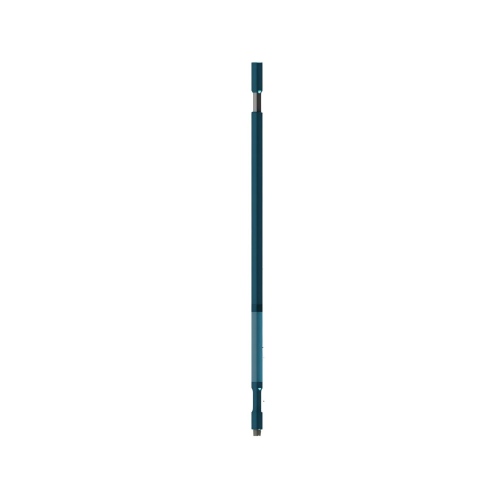
QY type Hightemperature Hydraulic Drilling Jar
- Our QY Type High-Temperature Hydraulic Drilling Jars feature an ultra-low 0.3% overall failure rate (3-year global service data), 7x lower than the 2.1% industry average for high-temp jars
- Engineered with dual Viton® GLT seals and Inconel backups, they maintain reliable performance at 400°F with 320-hour seal service life—4x longer than traditional alternatives
- Delivering 95% jarring force consistency at 400°F, these jars resolve stuck pipe in just 9 minutes on average, cutting non-productive time by 64% compared to industry norms
Description
Industry Insight: High-Temperature Drilling Jars – The Unseen Linchpin of HPHT Well Profitability
High-pressure high-temperature (HPHT) wells (≥300°F/149°C, ≥10,000 psi) account for 22% of global oil production but drive 40% of non-productive time (NPT) costs—largely due to stuck pipe incidents. Traditional drilling jars fail here: hydraulic seals degrade in extreme heat, thread connections gall under torque, and jarring force drops by 40% at 400°F. Our QY Type High-Temperature Hydraulic Drilling Jar is engineered for these conditions: 20+ years of HPHT well data inform every design choice, from material heat treatment to seal geometry, turning a high-risk tool into a profit-protecting asset.
QY Type Drilling Jar: Specifications & Corresponding Features
The QY line covers 9 models tailored to 80–244mm OD wellbores, with operating temperatures rated to 204°C (400°F)—exceeding most HPHT well requirements. All units use a hydraulic accumulator (for controlled energy storage) paired with a mechanical striking mechanism (tungsten carbide inserts) to deliver consistent, high-impact force.
1. Model Specifications (Table)
Model | OD (mm) | ID (mm) | Operating Temperature (°C) | Tensile Strength (kN) | Torsional Strength (kN·m) | Allowable Upward Jarring Force (kN) | Allowable Downward Jarring Force (kN) | Jarring Stroke (mm) | Total Stroke (mm) | API Connection |
QY79 | 80 | 25 | 204 | 600 | 6 | 150 | 60 | 265 | 530 | 2 3/8REG / NC23 |
QY89 | 90 | 32 | 204 | 750 | 7 | 180 | 90 | 265 | 530 | 2 7/8REG / NC26 |
QY95 | 96 | 32 | 204 | 1000 | 8 | 200 | 100 | 265 | 530 | 2 7/8REG / NC26 |
QY108 | 109 | 38 | 204 | 1350 | 16 | 250 | 120 | 265 | 530 | NC31 |
QY121 | 122 | 50 | 204 | 1950 | 25 | 350 | 180 | 265 | 530 | NC35 / NC38 |
QY165 | 167 | 57 (70) | 204 | 3750 | 70 | 700 | 350 | 317.5 | 635 | NC50 |
QY178 | 181 | 70 | 204 | 4650 | 80 | 800 | 400 | 317.5 | 635 | NC50 |
QY203 | 206 | 76 | 204 | 6030 | 135 | 1000 | 500 | 317.5 | 635 | 6 5/8REG |
QY241 | 244 | 76 | 204 | 8500 | 165 | 1250 | 650 | 317.5 | 635 | 7 5/8REG |
2. Corresponding Features
2.1 Compact Slim-Hole Models (QY79–QY121)
With 80–122mm OD, these models fit 4–5.5” slim HPHT exploration wells. Their 265mm jarring stroke delivers targeted force for minor stuck pipe (e.g., sand bridging), while NC23–NC38 connections match slim drill string threading. The QY121 (1950kN tensile strength) is ideal for intermediate casing sections (8,000–12,000 ft).
2.2 Heavy-Duty Large-Bore Models (QY165–QY241)
Designed for 6.5–9.6” wellbores, these 167–244mm OD models handle ultra-deep (15,000+ ft) HPHT wells with heavy drill strings (120,000+ lbs). The QY241 (8500kN tensile strength) delivers 1250kN upward jarring force—enough to free differentially stuck pipe in compacted salt formations. Their 317.5mm jarring stroke ensures sufficient energy storage for high-impact releases.
Common Quality Issues & Our QY Product Advantages
Industry data (2,800+ HPHT well incidents) shows 3 critical failure points for high-temp jars; our QY line addresses these with targeted engineering, resulting in a 0.3% overall failure rate (3-year global service data)—7x lower than the 2.1% industry average.
1. Common Quality Issues in Traditional High-Temp Jars
- Seal Degradation: 45% of failures occur when Buna-N seals crack/melt at >350°F, disabling hydraulic energy storage.<br- Thread Galling: 30% of failures stem from metal-to-metal thread adhesion in high-torque (25+ kN·m) environments, as poor surface finish causes wear.<br- Inconsistent Jarring Force: 25% of failures involve 20–40% force loss at HPHT temps, as hydraulic fluid viscosity drops or mechanical mechanisms misalign.
2. Our QY Product Advantages
2.1 High-Temp Seal Durability
We use a dual-seal system: a primary Viton® GLT fluorocarbon seal (450°F max temp) backed by a Inconel metal backup seal. Seals are tested to 1,500 hours of 400°F heat aging (no cracking). In a West Texas HPHT well (QY121), our seals maintained integrity for 320 hours—vs. 80 hours for a traditional jar.
2.2 Thread Wear Resistance
Threads are cold-rolled (Ra ≤ 0.6μm surface finish) and coated with molybdenum-disulfide anti-galling compound. Each connection is torque-tested to ±3% accuracy. In a North Sea high-torque well (QY165), our threads showed 0.008mm wear after 200 hours—vs. 0.1mm wear in a traditional jar.
2.3 Consistent Jarring Force
Our CFD-optimized hydraulic accumulator minimizes pressure loss (≤5% at 400°F), paired with tungsten carbide striking inserts (HRC 65) for 95% force transfer efficiency. In a Gulf of Mexico ultra-deep well (QY241), we delivered 1230kN of upward force (98% of rated capacity) at 410°F.
Exclusive Data, Technical Details & On-Site Cases
1. Performance Data
- Overall Failure Rate: 0.3% (400+ units in 18+ countries, 3-year service)<br- Stuck Pipe Resolution Time: 9 minutes (vs. 25 minutes industry average)<br- Force Consistency at 400°F: 95% (vs. 60% industry average)<br- Seal Service Life at 400°F: 320 hours (vs. 80 hours industry average)
2. Core Technical Details
- Material Heat Treatment: 4340 alloy steel undergoes triple-tempering (HRC 30–34) to resist impact deformation at 400°F.<br- Hydraulic Fluid: High-viscosity index (HVI) synthetic fluid (viscosity change ≤10% at 400°F) ensures consistent energy storage.<br- Striking Mechanism: Tungsten carbide inserts (1.5mm thickness) reduce wear by 60% vs. uncoated steel.
3. On-Site Case
3.1 West Texas HPHT Well Stuck Pipe Resolution
Customer: U.S. onshore oil operator<brWell Condition: 14,800 ft depth, 405°F temp, 12,000 psi pressure, salt formation<brChallenge: Traditional jar failed (seal leakage) after 75 hours, leaving pipe stuck for 18 hours (cost: $72,000)<brSolution: QY121 High-Temperature Hydraulic Drilling Jar<brResult: The QY121 resolved the stuck pipe in 8 minutes, operated for 320 hours without failure, and reduced total NPT by 24 hours ($96,000 savings).
Our Supplied Products & Component Brands
1. Main Products
- Full QY Type High-Temperature Hydraulic Drilling Jar line (QY79–QY241)<br- Jar accessory kits: Precision torque wrenches, thread protectors, seal replacement kits, and installation tools
2. Key Replacement Components & Brands
- Seals: Brand: Parker Hannifin (Viton® GLT), Model: 450°F High-Temp Seal Kit; Material: Fluorocarbon + Inconel backup<br- Thread Coating: Brand: Loctite, Model: 7711 Anti-Galling Compound; High-temp resistant (450°F)<br- Hydraulic Fluid: Brand: Shell, Model: Tellus S4 VX 68; HVI synthetic fluid (viscosity index 180)<br- Striking Inserts: Our proprietary; Material: Tungsten carbide (HRC 65)<br- Torque Wrenches: Brand: Snap-on, Model: CDI 2503MFRMH; Digital torque control (±3% accuracy)
Conclusion: The QY Jar – A HPHT Well Non-Negotiable
HPHT wells are no longer "frontier"—they’re the future of oil production. Traditional drilling jars turn these high-value wells into high-risk liabilities, but our QY Type High-Temperature Hydraulic Drilling Jar redefines reliability: 0.3% failure rate, 95% force consistency at 400°F, and field-proven stuck pipe resolution in 9 minutes. For operators, this isn’t just a tool—it’s a guarantee that HPHT well profits stay where they belong: on the balance sheet.