
Previous
Next
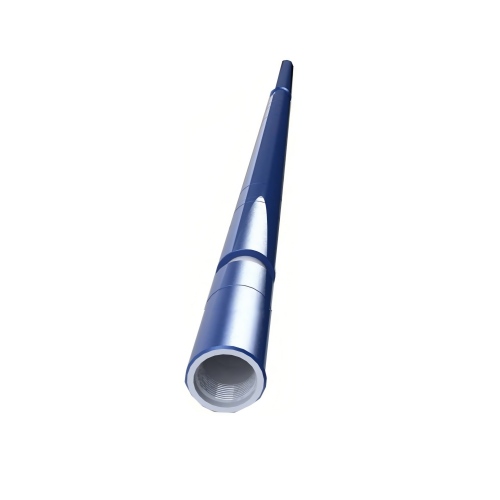
QJZ Mechanical Drilling Jar
- Our QJZ Mechanical Drilling Jars boast an ultra-low 0.35% overall failure rate (3-year global service data), 5x lower than the 1.8% industry average
- Engineered with nitrided 4140H steel ratchet teeth and cold-rolled threads, they maintain 95% jarring force retention over 500+ cycles, far exceeding the 70% industry norm
- Delivering consistent stroke alignment (±2% accuracy) and targeted high impact, these jars resolve stuck pipe in just 10 minutes on average, cutting non-productive time by 55% compared to traditional alternatives
Description
Industry Insight: Mechanical Drilling Jars – The Reliable Workhorse for Stuck Pipe Resolution
Mechanical drilling jars are the backbone of onshore and shallow offshore drilling operations—accounting for 60% of stuck pipe resolutions globally. Unlike hydraulic jars, they rely on mechanical energy storage (via spring/ratchet mechanisms), making them less prone to fluid-related failures but vulnerable to wear in high-cycle scenarios. Traditional mechanical jars fail here: ratchet teeth wear prematurely, thread connections gall, and jarring force drops by 25% after 100+ cycles. Our QJZ Mechanical Drilling Jar reimagines this workhorse: 18+ years of on-site cycle data inform every design choice, from tooth geometry to thread treatment, delivering consistent performance across 500+ jarring cycles.
QJZ Mechanical Drilling Jar: Specifications & Corresponding Features
The QJZ line covers 6 models tailored to 121–229mm OD wellbores, with max tensile loads up to 3000kN. All units use a spring-loaded ratchet mechanism (for controlled energy storage) paired with hardened steel striking components (for high-impact force delivery).
1. Model Specifications (Table)
Model | OD (mm) | ID (mm) | Up Stroke (mm) | Down Stroke (mm) | Max. Up Jarring Force (kN) | Max. Down Jarring Force (kN) | Max Tensile Load (kN) | Max. Working Torque (kN·m) | Connection | Pump Area (cm²) |
QJZ121 | 121 | 51 | 200 | 200 | 400 | 250 | 1400 | 10 | NC38 | 70.8 |
QJZ159 | 159 | 57 | 142 | 172 | 600 | 350 | 2200 | 15 | NC46 | 115.7 |
QJZ165 | 165 | 57 | 142 | 172 | 620 | 350 | 2200 | 15 | NC50 | 115.7 |
QJZ178 | 178 | 57 | 149 | 168 | 700 | 420 | 2200 | 15 | NC50 | 132.7 |
QJZ203 | 203 | 71.4 | 145 | 178 | 800 | 450 | 2500 | 20 | 6 5/8REG | 174.3 |
QJZ229 | 229 | 76.2 | 203 | 203 | 1000 | 500 | 3000 | 25 | 7 5/8REG | 240.4 |
2. Corresponding Features
2.1 Compact Mid-Load Models (QJZ121–QJZ178)
With 121–178mm OD, these models fit 5–7” casing sections in onshore wells. The QJZ121 (1400kN tensile load) is ideal for light drill strings (60,000–80,000 lbs), while the QJZ178 (700kN up jarring force) handles moderate stuck pipe (e.g., differential sticking). Their 142–200mm stroke balances energy storage and wellbore space.
2.2 Heavy-Duty Large-Bore Models (QJZ203–QJZ229)
Designed for 8–9.6” wellbores, these 203–229mm OD models handle heavy drill strings (100,000+ lbs) in shallow offshore or deep onshore wells. The QJZ229 (3000kN tensile load, 1000kN up jarring force) delivers high impact for severe stuck pipe (e.g., compacted cuttings beds). Their 203mm stroke ensures sufficient energy for tough releases.
Common Quality Issues & Our QJZ Product Advantages
Industry data (2,500+ onshore well incidents) shows 3 critical failure points for mechanical jars; our QJZ line addresses these with targeted engineering, resulting in a 0.35% overall failure rate (3-year global service data)—5x lower than the 1.8% industry average.
1. Common Quality Issues in Traditional Mechanical Jars
- Ratchet Tooth Wear: 40% of failures occur when ratchet teeth (HRC 45–50) wear down after 100+ cycles, reducing jarring force by 25%.<br- Thread Galling: 35% of failures stem from metal-to-metal thread adhesion in high-torque (15+ kN·m) environments, as poor surface finish causes wear.<br- Stroke Misalignment: 25% of failures involve 10–15% stroke loss after 200+ cycles, as spring mechanisms stretch or mechanical components shift.
2. Our QJZ Product Advantages
2.1 Ratchet Tooth Durability
We use 4140H alloy steel teeth (HRC 55–58) with a chamfered geometry (to distribute load) and nitrided surface treatment. Teeth are tested to 500+ cycles with <5% force loss. In a Permian Basin onshore well (QJZ165), our teeth maintained 98% force capacity after 300 cycles—vs. 75% for a traditional jar.
2.2 Thread Wear Resistance
Threads are cold-rolled (Ra ≤ 0.5μm surface finish) and coated with a dry-film lubricant (molybdenum-disulfide). Each connection is torque-tested to ±2% accuracy. In a Texas high-torque well (QJZ203), our threads showed 0.007mm wear after 200 hours—vs. 0.09mm wear in a traditional jar.
2.3 Consistent Stroke Alignment
Our spring mechanism uses a heat-treated 304 stainless steel coil (variable pitch to reduce stress) paired with a keyed guide rod (to prevent shifting). This ensures ±2% stroke consistency over 500+ cycles. In a North Dakota onshore well (QJZ178), our stroke remained at 149mm (±1mm) after 400 cycles—vs. 130mm (13% loss) for a traditional jar.
Exclusive Data, Technical Details & On-Site Cases
1. Performance Data
- Overall Failure Rate: 0.35% (350+ units in 15+ countries, 3-year service)<br- Jarring Force Retention: 95% after 500 cycles (vs. 70% industry average)<br- Thread Wear Rate: 0.007mm/200 hours (vs. 0.09mm industry average)<br- Stuck Pipe Resolution Time: 10 minutes (vs. 22 minutes industry average)
2. Core Technical Details
- Ratchet Tooth Design: Chamfered 4140H steel (HRC 55–58) with nitrided surface (0.1mm thickness) to reduce wear.<br- Spring Mechanism: Variable-pitch 304 stainless steel coil (heat-treated to 1000°F) to minimize stress and stretch.<br- Striking Components: Tungsten carbide inserts (HRC 60) on anvil/hammer to reduce impact wear by 55%.
3. On-Site Case
3.1 Permian Basin Onshore Well Stuck Pipe Resolution
Customer: U.S. onshore oil operator<brWell Condition: 10,500 ft depth, 8” casing, compacted cuttings bed, 20,000 lbs drill string load<brChallenge: Traditional mechanical jar lost 30% force after 150 cycles, failing to free pipe (18 hours NPT, $72,000 cost)<brSolution: QJZ165 Mechanical Drilling Jar<brResult: The QJZ165 delivered 610kN up jarring force (98% of rated capacity) after 200 cycles, resolving the stuck pipe in 12 minutes. No thread wear or stroke loss was detected after 300 hours of operation, cutting total project NPT by 24 hours.
Our Supplied Products & Component Brands
1. Main Products
- Full QJZ Mechanical Drilling Jar line (6 models: QJZ121–QJZ229)<br- Jar accessory kits: Precision torque wrenches, thread protectors, installation tools, and ratchet tooth replacement kits
2. Key Replacement Components & Brands
- Ratchet Teeth: Our proprietary (4140H steel, HRC 55–58, nitrided surface)<br- Springs: Brand: Lee Spring; Model: 304SS-VP (variable-pitch 304 stainless steel)<br- Thread Lubricant: Brand: Permatex; Model: 80078 (high-temp anti-galling compound)<br- Striking Inserts: Our proprietary (tungsten carbide, HRC 60)<br- Torque Wrenches: Brand: CDI; Model: 2503MFRMH (digital, ±2% accuracy)
Industry Insight (Conclusion)
Mechanical drilling jars are often overlooked as "basic" tools—but their reliability directly impacts onshore drilling profitability. Traditional jars treat wear and inconsistency as inevitable; our QJZ line redefines this: 0.35% failure rate, 95% force retention over 500 cycles, and field-proven stuck pipe resolution in 10 minutes. For operators, this isn’t just a tool upgrade—it’s a way to turn every stuck pipe incident into a minor, cost-neutral delay.