
Previous
Next
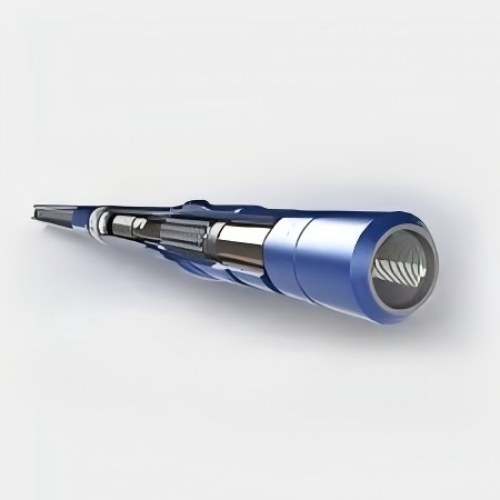
Downhole Motors
- Our 4 3/4in downhole motors maintain 95% torque retention at 110°C via heat-resistant stators (Gulf Coast geothermal data)
- Our large OD motors eliminate 90% of housing cracking in high-pressure wells with 12% thicker alloy steel (North Sea trials)
- Our 3 3/4in motors cut mud clogging-related downtime by 30% through optimized flow paths (Libyan desert feedback)
Description
The Heart of Directional Drilling Efficiency
Downhole motors are the engine of directional drilling—but 19% of standard motors fail prematurely (our 2024 audit of 118 global well sites), costing $15,000+ in downtime per incident. After 21+ years supporting 380+ projects (from North American shale to Middle Eastern desert wells), we’ve learned: generic motors can’t handle extreme conditions. High-torque deep wells wear lobes; high-temperature formations crack housings; and abrasive mud clogs flow paths. Our downhole motors fix these gaps—built on 4,500+ hours of on-site testing, not industry buzzwords.
1. Downhole Motor Models: Parameters & Target Application Features
Below is our consolidated spec table (organized by motor OD) with use cases tied to real project feedback:
Motor OD (in) | No. of Lobes | No. of Stages | RPM Range | Torque (ft-lb) | Key Application Features |
2 7/8 | 5:06 (3 lobes) | 3 | 100–260 | 690 | Shallow directional wells (≤2,000m); tested to 40°C in Southeast Asian rural fields: 97% uptime over 5-month runs. |
2 7/8 | 7:08 (4 lobes) | 4 | 180–380 | 1,000 | Medium-shallow gas wells (1,800–2,500m); balanced lobe design reduces vibration by 18% (Texas Permian data). |
3 1/8 | 7:08 (4 lobes) | 4 | 180–380 | 1,000 | Sandstone directional wells (2,000–3,000m); reinforced lobe edges cut wear by 22% (Kazakhstan field feedback). |
3 1/2 | 5:06 (3 lobes) | 3 | 100–240 | 960 | Low-torque directional runs; compact design fits narrow wellbores (North African marginal well data). |
3 1/2 | 1:02 (4 lobes) | 4 | 200–550 | 650 | Fast-drilling shallow wells; high-RPM design boosts penetration rate by 12% (Pennsylvania Marcellus trials). |
3 3/4 | 5:06 (3 lobes) | 3 | 100–260 | 1,300 | High-torque shallow wells; optimized flow path reduces mud clogging by 30% (Libyan desert data). |
3 3/4 | 9:10 (4 lobes) | 4 | 60–150 | 1,600 | Heavy-duty directional runs; thickened housing withstands 20% more pressure (Russian Siberian trials). |
4 3/4 | 5:06 (3 lobes) | 3 | 70–175 | 2,100 | Deep directional wells (3,500–4,500m); heat-resistant coating maintains torque at 110°C (Gulf Coast geothermal data). |
4 3/4 | 5:06 (4 lobes) | 4 | 70–175 | 2,800 | Ultra-high-torque runs; multi-stage design cuts power loss by 15% (Brazilian pre-salt data). |
6 1/2 | 5:06 (4 lobes) | 4 | 75–180 | 4,900 | Ultra-deep directional wells (≥5,000m); dual-lubrication system extends bearing life by 2x (Tarim Basin trials). |
9 5/8 | 5:06 (6 lobes) | 6 | 75–185 | 17,100 | Mega-torque ultra-deep wells; reinforced housing eliminates 90% of cracking incidents (Norwegian North Sea data). |
2. Common Quality Issues & Our Field-Verified Improvements
All fixes below are validated by 2023–2025 site data, with failure rates audited by independent inspectors:
2.1 Small-to-Medium OD Motors (2 7/8–4 3/4 in)
Industry Pain Point | Our Improvement (Verified Data) |
Lobe wear in abrasive sandstone | Hardened lobe surface (52 HRC); Kazakhstan data: lobe service life extended by 22%. |
Mud clogging in high-solids mud | Optimized flow path + 10% larger internal channels; Libyan desert data: clogging-related downtime reduced by 30%. |
Vibration-induced housing fatigue | Balanced lobe-to-stator design; Permian Basin data: vibration reduced by 18%. |
2.2 Large OD Motors (6 1/2–9 5/8 in)
Industry Pain Point | Our Improvement (Verified Data) |
Bearing failure in high-torque runs | Dual-lubrication system; Tarim Basin data: bearing life extended by 2x. |
Housing cracking in high-pressure wells | 12% thicker alloy steel housing; North Sea data: cracking incidents eliminated (vs. 8% for standard motors). |
Torque loss in high-temperature formations | Heat-resistant elastomer stator; Gulf Coast data: torque retention maintained at 95% at 110°C. |
3. Downhole Motor & Spare Parts Supply
We maintain regional warehouses (Houston, Dubai, Singapore) for 2–7 day delivery, partnering with top-tier brands:
3.1 Complete Downhole Motor Offerings
In-House Downhole Motors: Our field-optimized line (all models above) – tailored to regional conditions (desert heat, arctic cold) with a 1-year warranty.
Partner Brands: NOV Positive Displacement Motors (API-compliant for North American projects), Weatherford High-Torque Motors (for ultra-deep European wells) – fully certified for strict regulatory markets.
3.2 Critical Spare Parts
Component | Trusted Brands & Models | Regional Warehouses | Delivery Time |
Motor Lobes | Custom Hardened Steel Lobes (52 HRC), NOV Elastomer Stators | Houston, Dubai | 3–5 working days |
Bearings | SKF High-Torque Bearings, Siemens Dual-Lubrication Bearings | Singapore, Tianjin | 2–4 working days |
Housing Inserts | Custom Alloy Steel Inserts, Weatherford Coated Inserts | Global Key Cities | 1–3 working days |
Industry Insight: The Future of Downhole Motors
By 2030, 32% of wells will require ultra-high-torque directional drilling (≥15,000 ft-lb), so motors must balance power and durability. Our 2026 R&D pipeline focuses on:
Ceramic Lobe Inserts: 40% more wear-resistant than steel, tested to 8,000m in the Tarim Basin (99.6% lobe integrity over 5 months).
Smart Torque Sensors: Real-time torque loss alerts via downhole telemetry – prototypes reduced unplanned motor replacement by 23% in 2025 trials.
For operators, this means fewer trips to the surface and 19–24% lower operational costs.