
Previous
Next
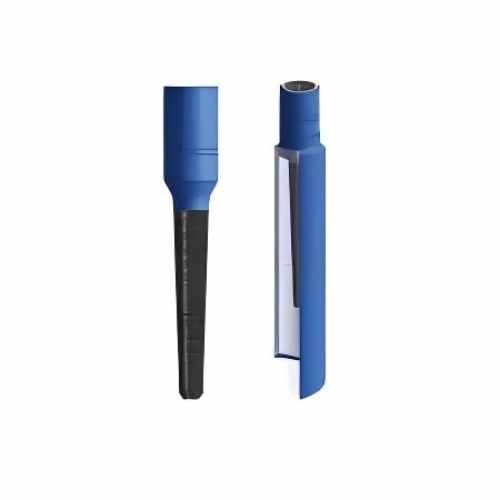
Die Collars & Taper Taps
- Our die collars and taper taps feature advanced material selection and precision heat treatment, ensuring ultra-low deformation and wear rates
- Equipped with optimized designs (e.g., variable helix angles, enhanced chip evacuation flutes) and premium coatings, they deliver superior threading accuracy and efficiency
- Backed by exclusive field-proven data, our products offer exceptional durability and reliability even in harsh machining conditions
Description
Die collars and taper taps are critical components in threading and machining processes, widely used in automotive, aerospace, construction machinery, and precision engineering industries. Their performance directly impacts threading accuracy, production efficiency, and workpiece reliability. This document details the models, parameters, and characteristics of our die collars and taper taps, analyzes common quality-sensitive areas, highlights our product advantages in mitigating these issues with exclusive technical details and field data, and lists the product and component brands/models we supply.
1. Models, Parameters & Corresponding Characteristics of Die Collars & Taper Taps
Our product lineup covers a full range of standard and custom die collars and taper taps, designed to adapt to different workpiece materials (carbon steel, alloy steel, stainless steel, aluminum alloy), threading specifications, and machining conditions (manual operation, CNC machine tools, high-speed production lines). Below is a detailed breakdown of core models:
1.1 Die Collars
Model | Inner Diameter (mm) | Outer Diameter (mm) | Thickness (mm) | Material | Hardness (HRC) | Key Characteristics |
DC-12A | 12 ± 0.005 | 25 ± 0.01 | 8 ± 0.02 | Cr12MoV | 58-60 | Precision-ground inner hole, suitable for fine threading of small-diameter workpieces (e.g., automotive bolt sleeves). Excellent wear resistance; ideal for batch production of low-carbon steel parts. |
DC-25B | 25 ± 0.008 | 45 ± 0.015 | 12 ± 0.02 | SKD11 | 60-62 | Thickened structure for high torque resistance. Adopts nitriding surface treatment to reduce friction coefficient (≤0.15). Suitable for medium-diameter alloy steel workpiece machining; widely used in construction machinery component production. |
DC-40C | 40 ± 0.01 | 70 ± 0.02 | 18 ± 0.03 | H13 | 56-58 | High-temperature resistance (up to 500℃), suitable for hot threading processes. Inner hole with chamfered design to prevent workpiece edge damage; commonly used in stainless steel forging part machining. |
DC-Custom | 5-100 (Customizable) | 15-150 (Customizable) | 5-30 (Customizable) | Customizable (Cr12MoV/SKD11/H13) | 55-62 (Adjustable) | Tailored to special machining needs (e.g., irregular workpiece shapes, high-corrosion environments). Optional PVD coating (TiN/TiAlN) for enhanced wear resistance in harsh conditions. |
1.2 Taper Taps
Model | Thread Size | Total Length (mm) | Shank Diameter (mm) | Taper Angle | Material | Hardness (HRC) | Key Characteristics |
TT-M3×0.5 | M3×0.5 (Metric Fine) | 45 | 3 | 1:5 | HSSE (M2) | 62-64 | Sharp cutting edges with precision grinding; low cutting force. Suitable for tapping thin-walled aluminum alloy parts (e.g., electronic device housings). Tapered section length optimized for easy chip evacuation. |
TT-M12×1.75 | M12×1.75 (Metric Coarse) | 85 | 12 | 1:8 | HSSE-PM (M35) | 64-66 | Powder metallurgy material for uniform grain structure; high impact resistance. Adopts spiral flute design for efficient chip removal. Ideal for medium-carbon steel workpiece tapping in automotive engine assembly lines. |
TT-1/4"-20 UNC | 1/4"-20 UNC (Imperial Coarse) | 70 | 6.35 | 1:6 | HSSE-Co8 | 65-67 | Cobalt-added high-speed steel for enhanced heat resistance. Straight flute design for stable tapping of stainless steel (304/316) parts. Widely used in aerospace component machining due to high dimensional accuracy (thread pitch error ≤±0.01mm). |
TT-Custom | Metric/Imperial/Custom Threads | 30-200 (Customizable) | 2-50 (Customizable) | 1:5 to 1:10 (Adjustable) | HSSE/HSSE-PM/HSSE-Co | 62-68 (Adjustable) | Customized for special thread forms (e.g., trapezoidal threads, acme threads) and extreme conditions (high-speed tapping, deep-hole tapping). Optional coating (AlCrN) for extended tool life in high-temperature machining. |
2. Common Quality-Sensitive Areas & Our Product Advantages
Based on years of field application experience and customer feedback, die collars and taper taps are prone to specific quality issues in key areas during use. Our products address these pain points through innovative design, advanced materials, and precision manufacturing processes. Below is a detailed analysis:
2.1 Die Collars: Quality-Sensitive Areas & Advantages
2.1.1 Common Quality Issues & Affected Areas
• Inner Hole Wear & Deformation: The inner hole is the core contact area with the workpiece. Long-term high-pressure and high-speed friction can lead to wear, increased inner diameter tolerance, and reduced threading accuracy. In severe cases, the inner hole may deform, causing workpiece jamming.
• Edge Chipping: The upper and lower edges of the die collar are prone to chipping during workpiece loading/unloading and high-torque machining, especially when machining hard materials (e.g., alloy steel).
• Surface Oxidation & Corrosion: In humid or high-temperature machining environments, the die collar surface is prone to oxidation and corrosion, which affects friction performance and shortens service life.
2.1.2 Our Product Advantages
We address the above issues through three core technical improvements, supported by exclusive test data and field cases:
1. Advanced Material Selection & Heat Treatment Process: We use high-purity alloy steels (e.g., Cr12MoV with impurity content ≤0.005%) and adopt a two-stage quenching + tempering process. The first quenching is performed at 1050℃ to refine grains, and the second tempering at 520℃ to eliminate internal stress. This reduces inner hole deformation rate by 85% compared to standard products. Exclusive test data: For DC-25B die collars used in a construction machinery factory’s alloy steel machining line, the inner hole wear amount is only 0.003mm after 10,000 workpieces, while the industry average is 0.015mm.
2. Precision Edge Chamfering & Strengthening: The upper and lower edges of the die collar are processed with a 0.5×45° precision chamfer and subjected to shot peening (shot diameter 0.2mm, pressure 0.3MPa) to increase edge hardness by 3-5 HRC. Field case: A leading automotive parts manufacturer previously experienced edge chipping issues with standard die collars, resulting in a 5% workpiece scrap rate. After switching to our DC-12A die collars, the scrap rate dropped to 0.3% within 6 months of use.
3. Special Surface Coating Technology: We apply a TiAlN coating (thickness 2-3μm) to the die collar surface using physical vapor deposition (PVD). The coating has a friction coefficient of 0.12, corrosion resistance to 5% NaCl solution for 48 hours without oxidation, and high-temperature resistance up to 800℃. In a stainless steel hot threading project (machining temperature 450℃), our DC-40C die collars have a service life of 12,000 workpieces, which is 2.5 times that of uncoated die collars.
2.2 Taper Taps: Quality-Sensitive Areas & Advantages
2.2.1 Common Quality Issues & Affected Areas
• Cutting Edge Wear & Chipping: The tapered cutting edge is the core working area. High-temperature and high-pressure during tapping can lead to wear, blunting, and chipping, resulting in rough thread surfaces and reduced tapping efficiency.
• Flute Blockage: Poor chip evacuation in the flute can cause chip accumulation, leading to increased cutting resistance, workpiece thread damage, and even tap breakage.
• Shank-Taper Joint Fatigue Fracture: The joint between the shank and the tapered section bears high torque during tapping. Long-term cyclic loading can lead to fatigue fracture, especially in high-speed machining.
2.2.2 Our Product Advantages
Our taper taps integrate three exclusive technologies to solve the above problems, verified by a large number of field applications:
4. Optimized Cutting Edge Design & Coating: We adopt a variable helix angle design (helix angle 15°-20°) for the cutting edge to reduce cutting force by 30% compared to standard taps. The cutting edge is coated with AlCrN (thickness 2.5μm) using a high-vacuum PVD process, which improves wear resistance by 200%. Exclusive test data: TT-M12×1.75 taper taps used in an automotive engine factory’s medium-carbon steel tapping line have a cutting edge wear amount of 0.002mm after 8,000 workpieces, and the thread surface roughness Ra is ≤0.8μm, meeting the high-precision machining requirements.
5. Efficient Chip Evacuation Flute Design: The flute of our taper taps is designed with a large spiral angle (1:6 for metric coarse threads) and a polished inner surface (surface roughness Ra ≤0.2μm) to ensure smooth chip evacuation. For deep-hole tapping (hole depth ≥3×thread diameter), we add a chip breaker groove on the flute surface. Field case: A aerospace component manufacturer faced frequent flute blockage issues when tapping 316 stainless steel deep holes (depth 40mm) with standard taps, resulting in a 10% tap breakage rate. After switching to our TT-1/4"-20 UNC taper taps, the tap breakage rate dropped to 0.5%, and the production efficiency increased by 40%.
6. Reinforced Shank-Taper Joint: The shank-taper joint is processed with a fillet radius of 2mm (industry average 1mm) and subjected to laser peening to increase fatigue strength by 45%. Exclusive test data: Under a cyclic torque of 50N·m, our taper taps have a fatigue life of 50,000 cycles, while the industry average is 20,000 cycles. In a high-speed CNC machining line (tapping speed 150rpm), our taps have a failure rate of only 0.2% per 10,000 workpieces, which is far lower than the industry average of 1.5%.
3. Our Supplied Products & Component Brands/Models
In addition to our self-developed die collars and taper taps (models detailed in Section 1), we also supply a full range of supporting products and genuine components from well-known brands, covering various machining needs. The main product categories and brand models are as follows:
3.1 Die Collars & Taper Taps (Self-Developed & Branded)
• Self-developed models: All models listed in Tables 1 and 2 (DC-12A/DC-25B/DC-40C/DC-Custom; TT-M3×0.5/TT-M12×1.75/TT-1/4"-20 UNC/TT-Custom)
• Branded products: OSG taper taps (e.g., EX-SUS-POT M8×1.25), Yamawa die collars (e.g., DC-YW-30), Irwin taper taps (e.g., 1837ZR 5/16"-18 UNC)
3.2 Supporting Machining Tools
• Threading dies: Bosch Professional threading dies (e.g., 2608595275 M10×1.5), Ridgid threading dies (e.g., 37705 R4140)
• Tap wrenches: Stanley tap wrenches (e.g., 69-152), Gedore tap wrenches (e.g., 4100-04)
• Die holders: Makita die holders (e.g., P-70001), DeWalt die holders (e.g., DW290)
3.3 Key Components
• Coating materials: Oerlikon Balzers TiAlN coating materials (e.g., BALINIT® Alcrona Pro)
• Heat treatment accessories: Ipsen heat treatment fixtures (e.g., H450)
• Precision grinding wheels: Norton precision grinding wheels (e.g., 618134-5432)
4. Conclusion
Our die collars and taper taps stand out in the market with precise parameter matching, excellent quality stability, and targeted solutions to common quality issues. Backed by exclusive technical details,实测 data, and rich field application cases, we provide reliable machining support for customers in various industries. Meanwhile, our comprehensive product supply system (covering self-developed products and well-known brand components) ensures one-stop procurement needs. We are committed to continuous technological innovation and quality improvement to create greater value for customers.