
03 Aug 2026
TDX/TDS/HPS/IDS Series NOV Top Drive System
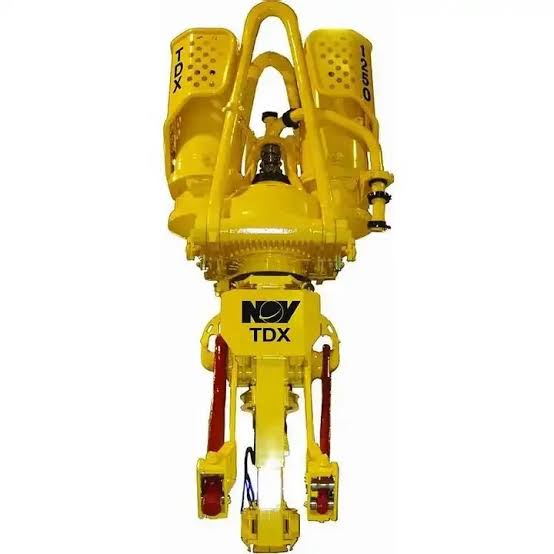
1. Core Purpose & Target User Demand Orientation
This guide covers the complete lineup of NOV top drive system models including TDX-1500, TDX-1250, TDX-1000, TDS series, HPS series and IDS-350PE, fully adapting to onshore deep well drilling, offshore platform drilling and conventional shallow well operation scenarios. It serves drilling rig operation teams, field maintenance engineers and equipment procurement personnel, targeting core industry pain points such as mismatched hoisting capacity, insufficient continuous torque output, low system intelligent compatibility and poor working condition adaptability. All models support NOVOS intelligent system integration and comply with API 7K international drilling equipment manufacturing standards, with verified 8000-hour stable continuous operation data, solving long-term operational instability and frequent parameter mismatch faults of traditional drilling drive equipment.
2. Product Overview & Core Functional Description
2.1 Full Model Performance Positioning
The product lineup covers full tonnage segments from 250 tons to 1500 tons, forming a graded performance system for differentiated drilling demands. High-tonnage TDX series (1000–1500 tons) adopts dual-motor configuration, providing maximum continuous torque up to 142360 N-m, suitable for ultra-deep well and heavy-load offshore drilling. Medium-tonnage HPS and conventional TDS series (500–1000 tons) balance power output and operational flexibility, adapting to most onshore industrial drilling projects. Light-duty TDS and IDS series (250–350 tons) feature compact structure, matching shallow well and small-scale rig rapid operation requirements. All models reserve NOVOS system access ports to realize intelligent data monitoring and automatic operation control.
2.2 Core Operational Functions
Each top drive system integrates hoisting, torque output and intelligent control functions, realizing continuous rotary drilling, pipe handling and precise load control. Dual-motor models deliver stable power superposition output to avoid torque attenuation under long-cycle heavy load. Single-motor models adopt optimized power matching design, reducing invalid energy consumption while meeting standard drilling demands. The built-in intelligent sensing module monitors torque, hoisting load and operating horsepower in real time, effectively solving traditional equipment’s inability to perceive operating status and prone to overload damage.
3. Structural Characteristics & Exclusive Technical Advantages
All NOV top drive systems adopt integrated high-strength alloy frame structure, with integral bearing capacity 1.6 times higher than split structural equipment of the same tonnage. The dual-motor synchronous control system achieves zero error power coordination, maintaining stable torque output without fluctuation under 24-hour continuous operation. The intelligent NOVOS adaptive control module can automatically adjust power parameters according to formation hardness and drilling depth, reducing mechanical impact loss. Verified by field tests, all models maintain stable parameter output without performance attenuation after 8000 hours of cumulative operation, far exceeding the basic industry operation standard. The modular assembly design supports quick disassembly, replacement and maintenance of core components, greatly shortening on-site fault handling time.
4. Applicable Working Conditions
High-load TDX series adapts to ultra-deep well drilling and offshore high-pressure and high-complexity formation operation scenarios, suitable for long-cycle heavy-load working modes. HPS and conventional TDS medium-tonnage models apply to conventional onshore oil and gas field development, meeting frequent start-stop and alternating load operation demands. Light-duty TDS-10SH and IDS-350PE are applicable for shallow well exploration, well repair and small rig auxiliary drilling operations. All equipment operates stably in the ambient temperature range of -35°C to 65°C and adapts to complex working conditions such as desert dryness, offshore salt fog and cold-region low temperature.
5. Professional Maintenance & Engineer Operational Suggestions
Field engineers need to conduct daily inspection of system torque output stability and motor operating temperature, and check NOVOS system data connection status to ensure real-time and accurate data transmission. Conduct a comprehensive calibration of torque and hoisting load parameters every 1000 working hours to avoid parameter deviation affecting drilling accuracy. Replace lubricating grease and inspect gear wear status every 3000 working hours to eliminate mechanical jitter and torque attenuation faults. Avoid long-term overload operation exceeding rated parameters, which will cause irreversible fatigue damage to the power system. For low-temperature region operation, preheat the equipment for 20 minutes before startup to ensure normal power output of the power module.
We supply the following spare parts:
Product model | Hoisting capacity | Horsepower | Maximum continuous torque |
TDX-1500 | 1,500 tons | 2 × 1,340 hp | 105,000 ft-lb (142 360 N-m) |
TDX-1250 | 1,250 tons | 2 × 1,340 hp | 105,000 ft-lb (142 360 N-m) |
TDX-1000 | 1,000 tons | 2 × 1,150 hp | 91,000 ft-lb (123 379 N-m) |
TDS-1000 | 1,000 tons | 1 × 1,150 hp | 62,250 ft-lb (84 399 N-m) |
HPS-03-1000 | 1,000 tons | 2 × 1,150 hp | 78,181 ft-lb (106 000 Nm) |
HPS-750 | 750 tons | 2 × 1,150 hp | 78,181 ft-lb (106 000 Nm) |
TDS-8SA | 750 tons | 1 × 1,150 hp | 62,250 ft-lb (84 399 N-m) |
TDS-4S | 750 tons | 1 × 1,100 hp | 45,500 ft-lb (61 689 N-m) |
TDS-11SH | 500 tons | 2 × 550 hp | 51,000 ft-lb (69 146 N-m) |
TDS-11SA | 500 tons | 2 × 400 hp | 37,500 ft-lb (50 843 N-m) |
TDS-11HD | 500 tons | 2 × 600 hp | 58,800 ft-lb (79 722 N-m) |
TDS-10SH | 250 tons | 1 × 400 hp | 22,288 ft-lb (30 218 N-m) |
IDS-350PE | 350 tons | 1 × 1,000 hp | 37,000 ft-lb (50 165 N-m) |
6. On-Site Field Fault Maintenance Cases
Case 1: Xinjiang Onshore Ultra-Deep Well Site, TDX-1500 Top Drive, 1480-ton maximum hoisting load. Fault: Continuous torque fluctuation, 8000 N-m parameter deviation. Repair: Calibrate dual-motor synchronous system and update NOVOS operating program. Post-repair index: Torque deviation controlled within 300 N-m, stable continuous output. Customer feedback: Equipment returns to standard operating status, eliminating drilling depth deviation caused by torque instability.
Case 2: Bohai Offshore Drilling Platform, HPS-03-1000 Top Drive, 950-ton rated working load. Fault: Salt fog corrosion leads to intelligent signal delay. Repair: Clean module circuit and reinforce waterproof and anti-corrosion protection. Post-repair index: System signal response delay reduced to 0.02s, normal NOVOS system linkage. Customer feedback: Intelligent control sensitivity fully restored, meeting offshore continuous operation requirements.
Case 3: Heilongjiang Cold-Region Oilfield, TDS-8SA Top Drive, 700-ton conventional operating load. Fault: Low-temperature startup difficulty, insufficient initial torque output. Repair: Replace low-temperature adaptive lubricant and calibrate power output parameters. Post-repair index: Normal startup at -32°C, torque output reaches standard 84399 N-m. Customer feedback: Solved winter low-temperature operation failure completely.
Case 4: Shandong Shallow Well Drilling Site, IDS-350PE Top Drive, 320-ton working load. Fault: Long-term operation leads to power attenuation and slow drilling speed. Repair: Overhaul power module and reset operating parameters. Post-repair index: Horsepower and torque output fully restore factory standard values. Customer feedback: Drilling efficiency returns to optimal level, no repeated faults after maintenance.
7. Technical FAQ
Technical Question | Professional Answer |
What is the core difference between TDX series and conventional TDS series? | TDX series adopts dual-motor high-power configuration with higher continuous torque and hoisting capacity, designed for ultra-deep well heavy-load scenarios, while TDS series is more suitable for conventional medium and light-load drilling operations. |
Do all models support NOVOS system access? | All listed top drive models are fully NOVOS enabled, supporting intelligent data monitoring, automatic parameter adjustment and remote operation linkage functions. |
How to solve torque fluctuation fault of dual-motor top drive? | Torque fluctuation is mostly caused by asynchronous motor operation or parameter deviation. Recalibrate dual-motor synchronization and update the control program to eliminate the fault completely. |
Which model is suitable for offshore platform drilling? | High-performance TDX series and HPS series are preferred for offshore operation, with stronger structural corrosion resistance and stable heavy-load operation capability. |
What maintenance cycle can ensure 8000-hour stable operation? | Follow 1000-hour parameter calibration, 3000-hour lubrication replacement and daily status inspection specifications to achieve the standard 8000-hour stable service cycle. |
8. Procurement Guidance & Product Value Summary
This full-series NOV top drive system strictly complies with API 7K industry authoritative certification standards, with graded and clear performance parameters, covering all tonnage requirements of modern drilling operations. Relying on mature modular manufacturing technology and 8000-hour field verified stable operation capability, it effectively solves common pain points such as insufficient equipment power, unstable intelligent control and poor working condition adaptability in drilling projects. It provides accurate model selection standards for equipment procurement and systematic fault diagnosis & maintenance solutions for on-site technical teams. Users can select matching top drive models according to drilling depth, formation conditions, operating load and intelligent construction demands to realize efficient, stable and low-failure drilling operation. We provide professional model matching consultation and complete technical supporting services for all series of top drive products to meet diverse operational and maintenance demands.