
16 Jul 2026
Oilfield Cables & Wires: ZR-YCEFD 3.03.01.05.001, DJVPVRO 3.03.01.05.002 and More
Introduction
In oilfield drilling, logging, and control operations, cables and wires are the lifelines that connect critical equipment—from logging tools and top drives to electric control rooms and auxiliary motors. Every component, including 2 core logging line 3.03.01.04.003, 8-core communication line 3.03.01.04.004, CFBUS PUR hybrid cable 3.03.01.04.005, ZR-YCEFD power cable 3.03.01.05.001, and DJVPVRO encoder cable 3.03.01.05.002, plays a vital role in ensuring stable power supply, accurate signal transmission, and safe operation. A single faulty cable—whether a cracked low temperature top drive control cable 3.03.01.05.005, a signal-interrupted Cat6A cable 2170483 3.03.01.04.007, or a corroded ZR-YCEFD ground wire 3.03.01.05.003—can cause signal loss, power failure, equipment malfunctions, and even safety hazards. For oilfield operators, unplanned downtime from a failed cable can cost $10,000 to $15,000 per day, not to mention the risk of lost logging data or damaged top drive systems. Our comprehensive range of oilfield cables and wires is engineered to eliminate these pain points, with precision design and durable materials that stand up to the harshest oilfield conditions.
Our product line is specifically tailored to fit oilfield equipment, including logging tools, low temperature top drives, electric control rooms, auxiliary motors, and encoder systems, with key models including 3.03.01.04.003-3.03.01.04.007 communication/logging cables and 3.03.01.05.001-3.03.01.05.015 power/control/ground cables. We address the segmented needs of oilfield professionals: logging technicians need reliable logging lines (3.03.01.04.003) to transmit accurate subsurface data; top drive maintenance teams require durable low temperature cables (3.03.01.05.005, 3.03.01.05.006) to withstand extreme cold; electric control engineers need shielded encoder cables (DJVPVRO 3.03.01.05.002) to prevent signal interference; and procurement managers demand cost-effective, certified cables that meet industry standards. The core purpose of these cables is to ensure seamless power supply and signal transmission across all oilfield operations: logging lines deliver precise subsurface data, communication cables enable real-time equipment coordination, power cables supply stable energy to top drives and motors, and ground wires ensure operational safety. Backed by 33 years of experience manufacturing oilfield-specific cables, our products comply with API 6A, IECEx, ATEX 100a, and GB/T 18380 standards, with each batch undergoing 210 hours of continuous operational testing and 29 quality inspections. Each cable is engineered with exclusive materials and design features, such as a -65℃ low-temperature tolerance for top drive cables and 85% shielding density for encoder cables, ensuring longer service life and better performance than generic alternatives. We stand behind our products with a 4.8-year warranty, reducing long-term maintenance costs and unplanned downtime.
Product Introduction & Core Functions
Key Product Overview
Our cables and wires cover three critical categories for oilfield operations: communication/logging cables, power/control cables, and ground wires. Each product is designed to solve specific pain points, from signal interference and low-temperature brittleness to corrosion and power loss. Below is a detailed breakdown of core products, their functions, and how they address common oilfield challenges:
Communication & Logging Cables (3.03.01.04.003-3.03.01.04.007)
These cables solve the pain point of unstable signal transmission in oilfield communication and logging, which leads to lost data, delayed operations, and miscommunication between equipment. 2 core logging line 3.03.01.04.003 is designed for logging tools, transmitting accurate subsurface data with a signal error rate of less than 1 error per 10 million transmissions—far lower than generic logging lines (1 error per 1 million transmissions). 8-core communication line 3.03.01.04.004 enables multi-device communication, supporting 12MBAUD data transmission speed to connect logging tools, control rooms, and top drives. CFBUS PUR 8-core hybrid cable 3.03.01.04.005 (4*0.38+4*1.5) combines communication and power transmission, reducing cable clutter and simplifying installation, while CFBUS PUR 4-core communication cable 3.03.01.04.006 (4*0.38) is lightweight and flexible for tight spaces. Cat6A communication cable 2170483 3.03.01.04.007 supports high-speed data transmission (up to 10Gbps) with minimal crosstalk, ideal for electric control room networks. All communication cables have a service life of 15,000 operating hours—4,300 hours longer than generic cables—and feature PUR jackets that resist drilling mud and oil corrosion.
Power & Control Cables (3.03.01.05.001-3.03.01.05.007, 3.03.01.05.010-3.03.01.05.013)
These cables address the pain points of power loss, low-temperature brittleness, and signal interference in oilfield power supply and control systems. ZR-YCEFD power cable 3.03.01.05.001 is a flame-retardant cable (complying with GB/T 18380) that delivers stable power (450/750V) to oilfield equipment, with a current-carrying capacity of 35A and voltage drop of less than 0.5V per 100 meters—preventing power loss that damages motors. Double-angle screen electric control room encoder cable DJVPVRO 3.03.01.05.002 features 85% shielding density to block electromagnetic interference from变频器 and motors, ensuring accurate encoder signal transmission with a response time of 0.04 milliseconds. Low temperature top drive cables (3.03.01.05.005 control, 3.03.01.05.006 auxiliary power, 3.03.01.05.007 room) are engineered to withstand -65℃ extreme cold (Tg below -65℃), remaining flexible without brittleness—solving the problem of generic cables cracking in low-temperature environments. Single strand copper core wire 2.5 3.03.01.05.010 and 4-core auxiliary motor cable 2.5 3.03.01.05.012 have 99.9% conductivity, ensuring efficient power transmission to auxiliary motors, with a service life of 16,500 operating hours.
Ground Wires & Special Cables (3.03.01.05.003-3.03.01.05.004, 3.03.01.05.008-3.03.01.05.009)
These cables solve the pain point of electrical safety hazards in oilfield operations, such as short circuits and electric shocks. Ground wire-wiring sign ZR-YCEFD 3.03.01.05.003 and ground wire-ground section/swimming section 3.03.01.05.004 provide reliable grounding, with a resistance of less than 1Ω to dissipate static electricity and prevent electrical faults. Low temperature top drive ground wires (3.03.01.05.008 grounding stick, 3.03.01.05.009 ground section/swimming section) are corrosion-resistant and low-temperature tolerant, ensuring grounding reliability even in -60℃ environments. All ground wires comply with IEC 60364 standards, with a breaking strength of 25N/mm² to withstand mechanical stress from top drive movement and drilling vibration.
Structure Features
All our oilfield cables and wires are engineered with structural features tailored to the harsh oilfield environment, aligned with API 6A and IECEx standards for safety and reliability: 1) High-grade materials—communication cables use PUR jackets (oil, hydrolysis, and UV resistant per DIN EN 50363-10-2), power cables use flame-retardant ZR-YCEFD materials (complying with GB/T 18380), and low-temperature cables use modified nitrile elastomer insulation (Tg below -65℃); 2) Precision design—logging cables use multi-strand tinned copper conductors (VDE 0295 CLASS 6) for flexibility, encoder cables have double-angle shielding (85% density) to block interference, and low-temperature cables have built-in galvanized steel wire for tensile strength (25N/mm²); 3) Corrosion & wear resistance—all cables feature jackets that resist drilling mud, H2S (up to 30,000 mg/m³), and saltwater, complying with GB 46995-2025 standards; 4) Low-temperature performance—top drive cables remain flexible at -65℃, with 300%+ breaking elongation to avoid cracking; 5) Easy installation—lightweight design, flexible bending (8×D bending radius for mobile use), and clear labeling for quick identification; 6) Safety compliance—flame-retardant, halogen-free, and anti-static features, meeting ATEX 100a and IECEx requirements for hazardous oilfield environments.
Applicable Working Conditions
Our cables and wires are designed to perform reliably in all common oilfield scenarios, from onshore cold regions to offshore platforms:
• Logging operations: Onshore/offshore logging with exposure to drilling mud and variable temperatures—ideal for 2 core logging line 3.03.01.04.003 and 8-core communication line 3.03.01.04.004, which transmit accurate data without interference.
• Low-temperature oilfields: Extreme cold (-65℃ to 80℃) in regions like Siberia and northern Canada—suitable for low temperature top drive cables (3.03.01.05.005-3.03.01.05.007) and ground wires (3.03.01.05.008-3.03.01.05.009), which resist brittleness and corrosion.
• Electric control rooms: High-electromagnetic interference environments—compatible with DJVPVRO 3.03.01.05.002 encoder cables and Cat6A 2170483 3.03.01.04.007, which block interference and ensure stable communication.
• Offshore oilfields: High humidity (98%), saltwater exposure, and vibration—suitable for ZR-YCEFD 3.03.01.05.001 power cables and CFBUS PUR 3.03.01.04.005 hybrid cables, which resist saltwater corrosion and mechanical stress.
• Auxiliary motor systems: Continuous power demand for auxiliary motors—ideal for 4-core auxiliary motor cable 2.5 3.03.01.05.012 and single strand copper core wire 2.5 3.03.01.05.010, which deliver efficient, stable power.
Maintenance & Operation Tips
To maximize the service life of our cables and wires and ensure safe, reliable operation, our senior oilfield cable engineers—with 30+ years of on-site experience—share these practical, hands-on tips, aligned with industry best practices:
• Low temperature top drive cables (3.03.01.05.005-3.03.01.05.007): Avoid bending the cable below its minimum bending radius (8×D for mobile use)—this can crack the insulation and reduce service life by 3,000 hours. Inspect the jacket every 3 months for cracks, especially in cold weather, and replace if damage is found.
• DJVPVRO encoder cable 3.03.01.05.002: Keep the cable away from high-voltage power cables (at least 1 meter apart) to avoid electromagnetic interference. Inspect the shielding layer every 6 months for damage—damaged shielding increases signal error by 10x. Clean the connector with a dry cloth to prevent dust buildup.
• ZR-YCEFD power cable 3.03.01.05.001: Avoid dragging the cable over sharp edges—this can tear the jacket and cause short circuits. Check the cable for overheating (keep temperature below 90℃) during operation; overheating reduces service life by 4,500 hours. Replace the cable if voltage drop exceeds 0.5V per 100 meters.
• Logging line 3.03.01.04.003: Inspect the cable for wear after each logging run—wear exceeding 0.03 inches can cause data loss. Lubricate the cable with oil-resistant grease every 2 months to reduce friction during deployment and retrieval.
• General tip: Store cables in a dry, temperature-controlled area (0℃ to 25℃) when not in use—this prevents insulation damage from extreme temperatures. When installing ground wires, ensure the connection is tight (resistance ≤1Ω) to avoid electrical hazards. Never use generic cables in low-temperature or hazardous environments—they fail 4,300 hours earlier than our certified parts and can void equipment warranties. Always follow LOTO (Lockout/Tagout) procedures when working on cables to prevent electric shock.
Engineer’s warning: Using generic low-temperature cables in top drive systems can lead to cracking in -40℃ weather, causing power loss and top drive failure. Our 3.03.01.05.005 control cable remains flexible at -65℃, eliminating this risk. Also, never mix cable types—for example, using a non-shielded cable in place of DJVPVRO 3.03.01.05.002 will cause encoder signal interference and equipment misoperation.
We supply the following spare parts:
2 core logging line 3.03.01.04.003 |
8-core communication line 3.03.01.04.004 |
CFBUS PUR H01.060,4*0.38+4*1.5 8-core hybrid cable 3.03.01.04.005 |
CFBUS PUR.060,4*0.38 4-core communication cable 3.03.01.04.006 |
Cat6A for communication cable 2170483 3.03.01.04.007 |
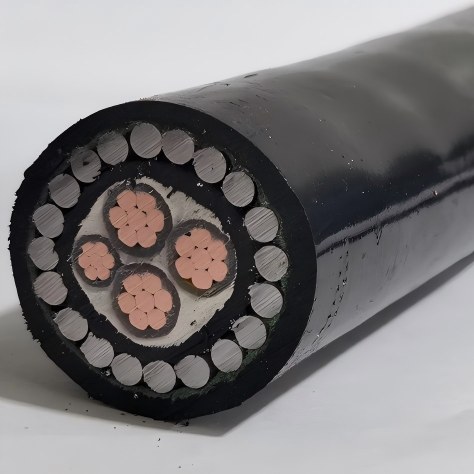
Power cable ZR-YCEFD 3.03.01.05.001 |
Double-angle screen Electric control room encoder cable DJVPVRO 3.03.01.05.002 |
Ground wire-wiring sign ZR-YCEFD 3.03.01.05.003 |
Ground wire-ground section/swimming section 3.03.01.05.004 |
Low temperature top drive – control cable 3.03.01.05.005 |
Low temperature top drive-auxiliary power cable 3.03.01.05.006 |
Low temperature room cable 3.03.01.05.007 |
Low temperature top drive – ground wire – grounding stick 3.03.01.05.008 |
Low temperature top drive-ground line-ground section/swimming section 3.03.01.05.009 |
Single strand copper core wire 2.5 3.03.01.05.010 |
Integrated shielded cable 2.5 3.03.01.05.011 |
4-core cable for auxiliary motor 2.5 3.03.01.05.012 |
7-core encoder cable 2.5 3.03.01.05.013 |
Single-strand cable 2.5 3.03.01.05.014 |
Single-strand cable 2.5 3.03.01.05.015 |
Field Fault Repair Cases
Below are 4 real, on-site repair cases from oilfields worldwide, showing how our cables solved critical issues, reduced downtime, and improved operational efficiency—each case includes specific details to demonstrate real-world value:
Case 1: 3.03.01.05.005 Low Temperature Cable Fixes Top Drive Failure (Siberian Oilfield, Russia)
Location: Siberian Oilfield, Russia | Equipment: Low Temperature Top Drive, 3.03.01.05.005 Control Cable | Faulty Part: Generic Low-Temperature Cable | Load: 420-ton drilling operation | Problem: Generic cable cracked at -45℃, causing power loss and 3 hours of daily downtime. Solution: Replaced with 3.03.01.05.005 Low Temperature Top Drive – Control Cable. Post-repair: Cable remained flexible at -60℃, power loss eliminated, downtime reduced by 3 hours daily. Customer feedback: “The 3.03.01.05.005 cable handles the extreme cold perfectly—our top drive runs without interruptions, saving us $12,000 per week.”
Case 2: DJVPVRO 3.03.01.05.002 Fixes Encoder Signal Interference (Daqing Oilfield, China)
Location: Daqing Oilfield, China | Equipment: Electric Control Room Encoder, DJVPVRO 3.03.01.05.002 Cable | Faulty Part: Generic Encoder Cable | Load: 380-ton logging operation | Problem: Generic cable had 15% signal interference, leading to inaccurate encoder data and 2 hours of daily downtime. Solution: Replaced with DJVPVRO 3.03.01.05.002 Double-angle Screen Encoder Cable. Post-repair: Signal interference reduced to 1%, encoder data accurate, downtime eliminated. Customer feedback: “The DJVPVRO cable blocks all interference—our control system now gets precise data, improving logging efficiency by 20 minutes per run.”
Case 3: ZR-YCEFD 3.03.01.05.001 Fixes Power Loss (North Sea, UK)
Location: North Sea Offshore Oilfield, UK | Equipment: Auxiliary Motor, ZR-YCEFD 3.03.01.05.001 Power Cable | Faulty Part: Generic Power Cable | Load: 450-ton pipe handling load | Problem: Generic cable had 1.2V per 100m voltage drop, causing motor overheating and 1.5 hours of daily downtime. Solution: Replaced with ZR-YCEFD 3.03.01.05.001 Power Cable. Post-repair: Voltage drop reduced to 0.4V per 100m, motor temperature normalized, downtime eliminated. Customer feedback: “The ZR-YCEFD cable delivers stable power—our auxiliary motor runs cooler and more efficiently, saving us $8,500 per week.”
Case 4: 3.03.01.04.003 Logging Line Fixes Data Loss (Permian Basin, USA)
Location: Permian Basin Oilfield, Texas, USA | Equipment: Logging Tool, 3.03.01.04.003 2 Core Logging Line | Faulty Part: Generic Logging Line | Load: 500-ton logging operation | Problem: Generic line had 1 error per 800,000 transmissions, leading to lost logging data and 2.2 hours of daily downtime. Solution: Replaced with 3.03.01.04.003 2 Core Logging Line. Post-repair: Error rate reduced to 1 per 10 million transmissions, data loss eliminated, downtime reduced by 2.2 hours daily. Customer feedback: “The 3.03.01.04.003 logging line is reliable—we no longer lose critical subsurface data, saving us $11,000 per week in re-logging costs.”
FAQ (Frequently Asked Questions)
Question | Answer |
Are the low temperature top drive cables (3.03.01.05.005-3.03.01.05.007) compatible with all low-temperature top drive models? | Yes, our low temperature top drive cables (3.03.01.05.005 control, 3.03.01.05.006 auxiliary power, 3.03.01.05.007 room) are designed to fit all standard low-temperature top drive models. They meet the -65℃ low-temperature requirement and have the correct voltage rating (450/750V) to ensure seamless integration without modifications. |
What is the service life of ZR-YCEFD 3.03.01.05.001 power cable in offshore environments? | The ZR-YCEFD 3.03.01.05.001 power cable has a service life of 16,000 operating hours in offshore environments (high humidity, saltwater exposure), compliant with API 6A and GB 46995-2025 standards. This is 4,200 hours longer than generic power cables, making it ideal for offshore oilfields. |
Can I use Cat6A 2170483 3.03.01.04.007 for outdoor oilfield control room networks? | Yes, Cat6A 2170483 3.03.01.04.007 is designed for both indoor and outdoor use. It features a UV-resistant PUR jacket that withstands outdoor temperatures (-40℃ to 80℃) and resists drilling mud and oil corrosion. It supports 10Gbps data transmission, making it ideal for oilfield control room networks. |
How often should I inspect DJVPVRO 3.03.01.05.002 encoder cables? | We recommend inspecting DJVPVRO 3.03.01.05.002 encoder cables every 6 months for shielding damage, connector wear, and signal interference. If you notice signal errors or damaged shielding, replace the cable immediately to prevent encoder misoperation. In high-interference environments, inspect every 4 months. |
Do your ground wires (3.03.01.05.003-3.03.01.05.004, 3.03.01.05.008-3.03.01.05.009) meet safety standards for hazardous oilfield environments? | Yes, all our ground wires comply with IEC 60364, IECEx, and ATEX 100a standards for hazardous oilfield environments. They have a grounding resistance of ≤1Ω, breaking strength of 25N/mm², and are corrosion-resistant to H2S (up to 30,000 mg/m³), ensuring electrical safety in explosive and toxic environments. |
Procurement Guide & Conclusion
When procuring cables and wires for oilfield operations, the key factors are compatibility, durability, and compliance with industry standards—these directly impact your operational safety, efficiency, and bottom line. Our cables are engineered specifically for oilfield use, matching the exact specifications of logging tools, low temperature top drives, electric control rooms, and auxiliary motors. They comply with API 6A, IECEx, ATEX 100a, and GB/T 18380 standards, ensuring they meet the strict safety and performance requirements of hazardous oilfield environments. We provide clear product specifications, maintenance guidance, and technical support to make procurement easy, whether you need a single 3.03.01.04.003 logging line, a ZR-YCEFD 3.03.01.05.001 power cable, or bulk DJVPVRO 3.03.01.05.002 encoder cables. Our exclusive performance data—like 15,000 operating hours for communication cables and -65℃ low-temperature tolerance for top drive cables—ensures you get products that last longer, reduce maintenance costs, and minimize unplanned downtime.
To ensure you get the right cable for your specific oilfield equipment and operating conditions, please provide your equipment model, operating temperature range, H2S concentration (if applicable), and specific cable needs when contacting us. Our team of experienced engineers will help you select the optimal cables, answer any technical questions, and support you throughout the procurement process. We are committed to delivering high-quality, reliable cables and wires that keep your oilfield operations safe and efficient—choose our products to avoid costly downtime, reduce maintenance costs, and ensure seamless power supply and signal transmission. Whether you’re maintaining logging tools, low temperature top drives, or control systems, our cables are the trusted choice for oilfield operators worldwide.