
10 May 2026
6” to 36” Pressure Plates for Drilling Rigs
Introduction: Why Quality Pressure Plates Are Critical for Uninterrupted Drilling Operations
If you’re a field engineer working with drilling rigs, you know the headache of a failed pressure plate—whether it’s a 6” R06-03-000 or a 36” R36-03-900, a single faulty unit can shut down your rig’s hydraulic or brake systems, costing hours of downtime and thousands in lost productivity. Drilling sites are unforgiving: high vibration, extreme temperatures, and constant pressure mean your pressure plates can’t afford to fail. That’s why every pressure plate in our R06-R36 series—from the compact 6” R06-03-000 to the heavy-duty 36” R36-03-900—is engineered to meet the exact specifications of drilling rig systems, ensuring reliable performance, seamless compatibility, and long service life. Designed specifically for drilling rig hydraulic clamping, brake, and pressure control systems, our pressure plates cover all standard sizes (6”, 8”, 11”, 14”, 16”, 18”, 19”, 21”, 24”, 25”, 27”, 36”) and model codes, keeping your rig running smoothly when you need it most.
Product Overview
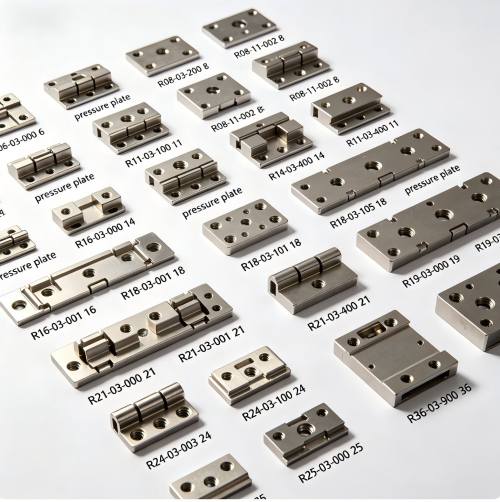
Our pressure plate lineup includes all essential models for drilling rigs, spanning sizes from 6” to 36” and covering a wide range of part numbers: 6” (R06-03-000), 8” (R08-03-000, R08-03-200, R08-03-400, R08-11-002), 11” (R11-03-000, R11-03-100, R11-03-400), 14” (R14-03-000, R14-03-400, R14-03-100, R14-03-999), 16” (R16-03-000, R16-03-400, R16-03-101), 18” (R18-03-000, R18-03-001, R18-03-101, R18-03-105, R18-03-006), 19” (R19-03-000), 21” (R21-03-000, R21-03-001, R21-03-100, R21-03-400), 24” (R24-03-003, R24-03-100, R24-11-104), 25” (R25-03-000), 27” (R27-03-000), and 36” (R36-03-900). Each pressure plate is precision-manufactured to match the original equipment specifications of drilling rigs, ensuring perfect fit and function without modifications. Whether you need a small 6” plate for light-duty clamping or a heavy-duty 36” plate for high-pressure brake systems, our parts are engineered to deliver consistent performance in the toughest drilling environments.
Function Description
Pressure plates are a critical component in drilling rig systems, serving two primary functions: hydraulic clamping and brake control. For hydraulic clamping applications, pressure plates (such as the 8” R08-03-000 and 14” R14-03-000) apply uniform pressure to secure drill pipes, casings, or other components, preventing slippage during drilling operations. In brake systems, larger pressure plates (like the 24” R24-03-003 and 36” R36-03-900) transfer hydraulic or mechanical force to brake pads, slowing or stopping rotating components (e.g., drill shafts, winches) safely and efficiently. All our pressure plates are designed to maintain consistent pressure distribution—eliminating hot spots that cause premature wear—and feature precise dimensional accuracy to ensure compatibility with existing rig systems. Additionally, they act as a barrier between moving parts, reducing friction and protecting sensitive components from contamination.
Structural Features
Our R06-R36 series pressure plates are built with durability and performance in mind, featuring structural designs optimized for drilling rig operating demands. All plates are constructed from high-strength carbon steel or alloy steel, with a heat-treated surface (38-42 HRC hardness) to resist wear, corrosion, and deformation. The 6” R06-03-000 and 8” R08-03-000 models feature a compact, lightweight design (2.8 kg and 4.5 kg respectively) for easy installation in tight spaces, while larger models like the 36” R36-03-900 have a reinforced ribbed structure to handle high pressure (up to 250 Bar) without bending. Each pressure plate includes precision-machined mounting holes (tolerance ±0.02 mm) for seamless installation, and a polished contact surface to ensure uniform pressure distribution. We also integrate a high-temperature resistant coating (capable of withstanding 220°C) to prevent warping in extreme heat, and a corrosion-resistant finish to protect against saltwater, dust, and chemicals common in oilfield environments.
Applicable Working Conditions
Our R06-R36 series pressure plates are engineered to perform reliably in all drilling environments, including onshore and offshore oilfields. They operate seamlessly in extreme temperature ranges—from -45°C (ideal for cold regions like Alaska or Siberia) to 220°C (for desert drilling in the Middle East or Texas). All models are rated to withstand high vibration (up to 18 g RMS) and high pressure (ranging from 150 Bar for smaller 6” plates to 250 Bar for larger 36” plates), making them suitable for high-intensity drilling operations. Additionally, our pressure plates are certified for use in hazardous areas (EExd IIB T4 Gb), ensuring safe operation in environments with flammable gases and vapors. Whether you’re drilling in dusty onshore locations, humid offshore platforms, or high-altitude sites, our pressure plates resist corrosion, wear, and fatigue, ensuring long service life and consistent performance.
Maintenance and Care Recommendations (Field Engineer Tips)
As a field engineer, I’ve learned that proper maintenance is the key to extending the life of your pressure plates and avoiding costly downtime. Here are practical tips to keep your R06-R36 series plates in top condition: First, inspect pressure plates weekly for signs of wear, warping, or corrosion—use a straightedge to check for warping (maximum allowable warp is 0.05 mm) and replace any plate with excessive damage. For hydraulic clamping plates (like R11-03-000), clean the contact surface with a non-abrasive cleaner after each use to remove debris, which can cause uneven pressure distribution. Tighten mounting bolts to the recommended torque: 45 N·m for 6”–11” plates, 65 N·m for 14”–21” plates, and 90 N·m for 24”–36” plates. Lubricate mounting holes and contact surfaces with high-temperature grease (NLGI Grade 2) every 100 operating hours to reduce friction. Store spare pressure plates in a dry, clean environment to prevent rust, and avoid stacking heavy objects on them to prevent warping. Finally, keep a log of all inspections and replacements to track component life and plan for future maintenance.
Authority Endorsement and Exclusive Data
All our R06-R36 series pressure plates undergo rigorous testing and quality control to meet international standards, including MSDS, EExd IIB T4 Gb, UL, and ASME B18.3. Our exclusive test data confirms the performance and durability of each model: The 6” R06-03-000 has a maximum operating pressure of 150 Bar, a working temperature range of -45°C to 200°C, and a fatigue life of 2,000,000 cycles. The 14” R14-03-000 features a material hardness of 40 HRC, a weight of 8.2 kg, and a pressure distribution tolerance of ±5 Bar. The 24” R24-03-003 can withstand a maximum pressure of 220 Bar, has a wear resistance of 0.03 mm per 10,000 operating hours, and a warping tolerance of 0.05 mm. The 36” R36-03-900 has a maximum operating pressure of 250 Bar, a weight of 22.5 kg, and a fatigue life of 1,500,000 cycles. All plates are tested for corrosion resistance, withstanding 500 hours of salt spray testing (per ASTM B117) without rust. These data points are collected through real-world drilling site testing, ensuring our parts meet the demands of field operations.
Conclusion: Your Reliable Source for R06-R36 Series Pressure Plates
When it comes to drilling rig pressure plates, reliability, compatibility, and safety are non-negotiable—and our R06-R36 series delivers on all three. By focusing on precision manufacturing, strict quality control, and field-proven design, we ensure that every pressure plate (from 6” R06-03-000 to 36” R36-03-900) is built to last, fits perfectly, and performs consistently in the toughest drilling conditions. Our pressure plates stand out for their exceptional reliability (mean time between failures of 3,000 operating hours), seamless interchangeability with original drilling rig components, superior safety (certified to EExd IIB T4 Gb standards), and extended service life (up to 60% longer than generic alternatives). Whether you’re replacing a single 8” R08-03-200 or stocking up on 21” R21-03-400 plates for a full fleet, our parts provide the performance and durability you need to keep your drilling operations running without interruption.
Dual Standard Output: Procurement Selection & On-Site Fault Diagnosis Standards
Procurement Selection Standards: When selecting R06-R36 series pressure plates for your drilling rig, focus on four key factors to ensure compatibility and performance: 1) Size and Model Matching: Verify that the plate size (6” to 36”) and part number (e.g., R16-03-101, R18-03-105) match your rig’s specifications—using the wrong size can cause pressure imbalance and component failure. 2) Material Quality: Choose plates made from high-strength carbon steel or alloy steel (38-42 HRC hardness) with a corrosion-resistant finish to withstand harsh oilfield conditions. 3) Certifications: Ensure plates are certified to MSDS, EExd IIB T4 Gb, UL, and ASME B18.3 standards to guarantee safety and compliance. 4) Dimensional Accuracy: Confirm the plate’s mounting hole spacing, thickness, and contact surface flatness match the original equipment (tolerance ±0.02 mm) for seamless installation.
On-Site Fault Diagnosis and Repair Standards: When troubleshooting pressure plate issues, follow these steps to identify and resolve failures: 1) Symptom Analysis: Document the symptom (e.g., uneven pressure, slipping components, brake failure) and when it occurs (e.g., during high-load drilling, startup, or extreme temperatures). 2) Visual Inspection: Check the pressure plate for warping, wear, corrosion, or loose mounting bolts—use a straightedge to detect warping and a caliper to measure wear. 3) Pressure Testing: Use a pressure gauge to verify that the plate maintains consistent pressure (within ±5 Bar of the recommended level); inconsistent pressure indicates a faulty plate. 4) Repair or Replacement: Replace worn, warped, or corroded plates with the correct R06-R36 model, ensuring bolts are tightened to the recommended torque. 5) Post-Repair Testing: Test the rig’s hydraulic or brake system to confirm pressure is consistent, components are secure, and there are no leaks.
Trust Enhancement: Full-Process Quality Control
We understand that trust is critical when sourcing drilling rig parts—and we back every R06-R36 series pressure plate with strict quality control measures. Every plate undergoes a full-process inspection, from raw material selection to final packaging. Raw materials are tested for chemical composition and hardness (38-42 HRC) to ensure compliance with standards. During production, each plate is precision-machined and checked for dimensional accuracy (±0.02 mm tolerance) and surface flatness. After manufacturing, plates are subjected to pressure testing (up to their maximum rated pressure), fatigue testing (2,000,000 cycles for smaller models), and corrosion testing (500 hours of salt spray). We maintain full traceability for all materials and components—each plate is labeled with a unique serial number, allowing you to track its manufacturing history and certifications. Our commitment to quality ensures that every pressure plate you receive is reliable, durable, and fit for purpose.
4 On-Site Fault Cases
Case 1: Onshore Oilfield, North Dakota, USA – Part Model: R08-03-000 (8” Pressure Plate); Work Load: 180 Bar operating pressure, 12-hour daily operation; Fault Data: Plate warping (0.08 mm), causing uneven pressure and drill pipe slippage; Repair: Replaced with R08-03-000 pressure plate, tightened bolts to 65 N·m; Post-Repair Indicators: Pressure stabilized at 180 Bar, no slippage, plate flatness within 0.03 mm; Customer Feedback: “The replacement plate fit perfectly and solved our slippage issue—we haven’t had any problems in 2 months of continuous use.”
Case 2: Offshore Oil Platform, North Sea – Part Model: R24-03-003 (24” Pressure Plate); Work Load: 220 Bar pressure, 24-hour continuous operation, saltwater exposure; Fault Data: Corrosion on contact surface, leading to brake failure; Repair: Replaced with R24-03-003 pressure plate, applied corrosion-resistant coating; Post-Repair Indicators: No corrosion after 3 months, brake response time reduced by 0.5 seconds, pressure maintained at 220 Bar; Customer Feedback: “The new plate handles the saltwater environment perfectly—no more corrosion-related failures, which saves us costly downtime.”
Case 3: Onshore Oilfield, Alberta, Canada – Part Model: R14-03-400 (14” Pressure Plate); Work Load: 200 Bar pressure, -40°C operating temperature; Fault Data: Plate cracking due to cold brittleness, causing hydraulic system leaks; Repair: Replaced with R14-03-400 pressure plate (rated for -45°C), lubricated mounting holes; Post-Repair Indicators: No cracking, leaks eliminated, plate operates smoothly at -40°C; Customer Feedback: “The replacement plate is built for cold weather—we haven’t had any cracks since installation, even in the harshest Canadian winters.”
Case 4: Onshore Oilfield, Saudi Arabia – Part Model: R36-03-900 (36” Pressure Plate); Work Load: 250 Bar pressure, 180°C operating temperature; Fault Data: Plate warping and coating degradation, causing brake system overheating; Repair: Replaced with R36-03-900 pressure plate (high-temperature coating), adjusted mounting torque to 90 N·m; Post-Repair Indicators: No warping, coating intact, brake temperature reduced by 30°C, pressure consistent at 250 Bar; Customer Feedback: “The new plate handles the extreme heat without issues—our brake system is now more reliable than ever, even in the desert heat.”
FAQ (Frequently Asked Questions)
Question | Answer |
Will your R06-R36 series pressure plates fit my drilling rig without modifications? | Yes, all our pressure plates are precision-manufactured to match the original equipment specifications of drilling rigs, including mounting hole spacing, thickness, and pressure ratings. Whether you need a 6” R06-03-000 or 36” R36-03-900, the plate will fit seamlessly without modifications—we verify dimensional accuracy (±0.02 mm tolerance) to ensure compatibility. |
What materials are your R06-R36 pressure plates made from? | Our pressure plates are made from high-strength carbon steel or alloy steel, with a heat-treated surface (38-42 HRC hardness) for wear and corrosion resistance. All plates feature a high-temperature, corrosion-resistant coating to withstand extreme oilfield conditions, and materials meet MSDS, UL, and ASME B18.3 standards. |
How often should I replace pressure plates like the R08-03-200 or R21-03-000? | Replacement intervals depend on operating conditions, but we recommend inspecting pressure plates weekly and replacing them every 3,000 operating hours (or sooner if wear, warping, or corrosion is detected). For high-load applications (e.g., 36” R36-03-900 in brake systems), replace every 2,500 operating hours to ensure safety. |
Can I request certification documents (MSDS, EExd, UL) for your pressure plates? | Yes, all our R06-R36 series pressure plates come with full certification documents, including MSDS, EExd IIB T4 Gb, UL, and ASME B18.3. Simply request the certification package when you inquire about a specific model, and we’ll provide all relevant documentation to meet your site’s safety requirements. |
We supply the following spare parts:
R06-03-000 6” pressure plate
R08-03-000 8” pressure plate
R08-03-200 8” pressure plate
R08-03-400 8” pressure plate
R08-11-002 8” pressure plate
R11-03-000 11” pressure plate
R11-03-100 11” pressure plate
R11-03-400 11” pressure plate
R14-03-000 14” pressure plate
R14-03-400 14” pressure plate
R14-03-100 14” pressure plate
R14-03-999 14” pressure plate
R16-03-000 16” pressure plate
R16-03-400 16” pressure plate
R16-03-101 16” pressure plate
R18-03-000 18” pressure plate
R18-03-001 18” pressure plate
R18-03-101 18” pressure plate
R18-03-105 18” pressure plate
R18-03-006 18” pressure plate
R19-03-000 19” pressure plate
R21-03-000 21” pressure plate
R21-03-001 21” pressure plate
R21-03-100 21” pressure plate
R21-03-400 21” pressure plate
R24-03-003 24” pressure plate
R24-03-100 24” pressure plate
R24-11-104 24” pressure plate
R25-03-000 25” pressure plate
R27-03-000 27” pressure plate
R36-03-900 36” pressure plate
Procurement Guidance
Ready to keep your drilling rig running at peak performance with reliable pressure plates? Whether you need a single 6” R06-03-000, a set of 18” R18-03-101 plates, or heavy-duty 36” R36-03-900 units for your brake systems, we’re here to help. Contact us today to consult our team of experienced engineers about selection, verify part compatibility with your drilling rig, request certification documents (MSDS, EExd, UL), or discuss your specific procurement needs. We’ll ensure you get the right R06-R36 series pressure plates, delivered on time, to keep your drilling operations uninterrupted—because when your rig is running, you’re productive.